
Brazil: Patents and Transgenic Plants
The Brazilian IPO (INPI) has initiated a public consultation on the Nota Técnica CPAPD nº 01/2022. The Nota ‘aims to define the guidelines to be followed by its examiners in the examination of patentability of inventions associated with transgenic plants’, specifically ‘elite event’.
Art 2 of the consultation welcomes suggestions and critiques related to the note and invite these to be submitted to cpapd.patentes@inpi.gov.br (deadline 30 days from 31 May 2022). After the deadline, and in accordance with Art 3 of the note, INPI will present the contributions provided by the consultation together with the final text. Click on the note to read the consultation publication [Portuguese]
The Nota Técnica CPAPD nº 01/2022 can be found here. [Portuguese]
The application of genetic transformation technology and the role of patents have been discussed for decades, in particular the matter of patentability of ‘living organism’ (biotechnology) and the ‘public-good breeding’. A technical understanding is needed as the requirements of novelty (new) and inventive step (non-obvious) are crucial. Moreover, whether the subject matter can be patentable. In any case, Brazil is a member of the international union for the protection of new varieties of plants (UPOV Convention) since 1999 and thus, have laws on plant variety protection in line with such international Convention.
|
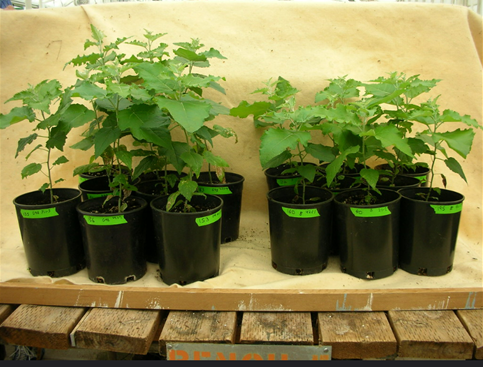
| Cisgenic tress by Oregon State University |
In principle, biological matter is not patentable (in Brazil this is so by Art 18(III) of the Industrial Property Law – Law No 9.279/96). However, it does not mean that an invention is not patentable just because the product and or process contain biological material. Here is then when it gets complicated and thus, the guidelines are welcome.
Article One of the CPAPD nº 01/2022 starts by providing a definition of what ‘elite event’ means. This is done by FIVE criteria, as follow:
1)the event transforms a plant
2) through the insertion of a transgene
3) by using a genetic construct
4) been stable, in which the insertion took place at a specific location in the plant genome, and
5) gives the plant a superior technical effect when compared to other transformation.
Because transgenic plants are the ‘inventive concept’ that links to the ‘accessory ones’, there is the need to discuss the potential patentability of the additional inventions that derive from the main invention.
Source INPI.


![[Interview] How does Mercado Libre deal with online IP infringements?](https://blogger.googleusercontent.com/img/b/R29vZ2xl/AVvXsEilexoWfiRujjpmd-Um4qIlawa0S8iWZ5i2EuqzJcCIyJs5srOU5br7y44YJkp0g5t8lBLAo5s5Gte-j0yg5M5cJ_wqLtTxY-ej8kzblVdoFHFsXxyLLHQeT7qtPQcDBqRWt0KfTHOh37sd/s72-c/Banner+BPP.jpg)


