
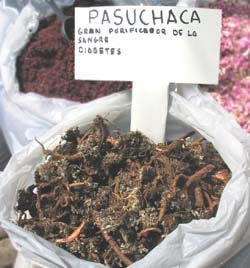
Pasuchaca: a known substance for a not so new use - will the JPO grant a patent?
From Peru, we hear about the work that the National Commission against Biopiracy does. This Commission, which is part of the National Institute for the Defense of Competition and the Protection of Intellectual Property (INDECOPI), is unique in the world and its role is to search the patent offices of all countries, in order to identify patents and, applications for patents, in which either Peruvian biological resources or traditional knowledge are involved.
Doing their role, the Commission recently identified a potential case of biopiracy in Japan. Towa Corporation submitted an application for a patent to the Japanese Patent Office (JPO). The request was filed under the description ‘Agent to increase HDL cholesterol levels’, and referred to an extract from the Pasuchaca (Geranium dielsianum) which is of Peruvian origin. The Commission further argues that the application lacks ‘inventive step’ (it is obvious for a person skilled on the art). Following this, the Foreign Ministry informed the Commission that it has received a communication from the JPO. This communication informs that the ‘patent application related to the Pasuchaca has not yet been examined and that it will take into account the observation submitted by Peru’.
Pasuchaca, is it novel and or obvious (inventive step)?
Typing the word ‘pasuchaca’ in the search engine Google, many hits appeared, referring to it as ‘medicinal plants’. The majority of sites noted that it is used for diabetes treatment and many others sites if not all, referred to it as a Peruvian plant. There are therefore, 2 issues to consider here:
- Access to Genetic Resources: Japan is a member of the Nagoya Protocol on Access to Genetic Resources and the Fair and Equitable Sharing of Benefits Arising from their Utilization to the Convention on Biological Diversity. This legal instrument (soft law) is an international agreement that aims at sharing the benefits arising from the utilization of genetic resources in a fair and equitable way. Therefore it is expected that the authorities request the applicant to provide for the disclosure of origin of genetic resources as a requirement for patentability of such resources (and/or associated traditional knowledge); and
- Pasuchaca has been ‘used’ by ancient Peruvians for the diabetes treatment [novelty ruined, but can still be patentable: new use of a known substance]. Therefore potentially Pasuchaca may have that inventive step needed as it happen in the case of MACA for hair growth agent and also as an anti-age cream [both products patented by NATUREX, this is so because the use of MACA had nothing to do with previous knowledge - serendipitous]. Will Pasuchaca have the same fate? I then proceed to add to my search the word ‘cholesterol’ and… the site ‘peruherbals.com’ claims that Pasuchaca is an * Effective hipoglucemiant, * Excellent for diabetes and pancreas, * Reduce high cholesterol (more info click here). Is it then obvious that as Pasuchaca reduces the bad cholesterol, it increases the good cholesterol [as claimed in the Japanese application?]. We'll have to wait to see the JPO decision.
Source INDECOPI.


![[Interview] How does Mercado Libre deal with online IP infringements?](https://blogger.googleusercontent.com/img/b/R29vZ2xl/AVvXsEilexoWfiRujjpmd-Um4qIlawa0S8iWZ5i2EuqzJcCIyJs5srOU5br7y44YJkp0g5t8lBLAo5s5Gte-j0yg5M5cJ_wqLtTxY-ej8kzblVdoFHFsXxyLLHQeT7qtPQcDBqRWt0KfTHOh37sd/s72-c/Banner+BPP.jpg)


