Welcome to our blog for Intellectual Property Law and Practice in Latin America!
¡Bienvenidos a nuestro blog de Derecho y Práctica de la Propiedad Intelectual en Latinoamérica!
Bem-vindo ao nosso blog sobre Direito e Prática de Propriedade Intelectual na América Latina!
Showing posts with label Brazil. Show all posts

Thursday, 15 June 2023

IPTango

[Guest Post] Brazilian Patent Overview and Challenges for 2023!


IPTango is pleased to publish a guest post by Michelle Angelim and Leonardo Cordeiro (Gruenbaum, Possinhas & Teixeira), discussing the current scenario and challenges in the field of patent law in Brazil for this year.


As the world becomes increasingly innovative and technology-driven, it becomes more critical for a country to have fast and efficient patent prosecution. In recent years, Brazil has faced challenges in balancing interests in the intellectual property field, especially in the patent sector. Since the beginning of the pandemic, patents have been the focus of controversies and diverging interests, as balancing the legal, social, administrative, economic, and political influences in the Brazilian patent system is arduous.

Regarding the current Brazilian scenario, it is essential to emphasize that the country has been going through several changes, considering the recent government transitions.

One of these changes directly impacted the Brazilian Patent and Trademark Office (BPTO) because said Institute left the former Ministry of Economy and is now part of the Ministry of Development, Industry, Commerce and Services, which consequently generated significant changes in its directors and presidency. The current interim president, Dr Júlio Cesar Moreira (former Patent Director), has worked at BPTO for years and is one of those responsible for the implementations promoting good progress in the patent application prosecution, such as the backlog tackle project. This project defines, for example, the creation of the preliminary official action, which we will discuss below in more detail.

The backlog tackle project

The implementation of the collaborative examination, through the backlog tackle project, aims to reduce the number of pending patent applications substantially by using previously conducted prior art search reports from other patent offices, requesting amendments in the claims or technical arguments that defend the patentability of the invention over the cited prior art. This implementation has significantly improved the application prosecution, avoiding excessive official actions, promoting procedural economy, and reducing the time for resolution of the cases.

A) Preliminary official actions

A good strategy for complying with the preliminary official action is to conform the Brazilian application to an already allowed/granted or considered patentable subject matter of the same patent family. However, it is important to remember the need for adequacy of the amendments to the current legal provisions, such as the normative instructions and examination guidelines for different areas, to avoid related technical official actions. Furthermore, it is essential to take into account the national sovereignty over the examination, established by the
Paris Convention (CUP) in its Art. 4 bis (1); therefore, there are no guarantees that the Brazilian patent application will be immediately allowed because it was adapted to an application already granted in another country.

To submit a good argumentation before the BPTO, it is necessary to clearly explain how the technical characteristics of the invention solve the technical problem described. In addition, it is required to indicate the new technical effect achieved and the advantages in relation to the prior art, citing the lines and pages of the specification that contain this information. It is also important to comment on the cited prior art, highlighting the differences between the subject matter of the application and the cited prior art. This information should demonstrate that a person skilled in the art would not have sufficient resources or inspiration to create or achieve the claimed invention based on the cited documents.

B) Divisional applications and PPH agreements

A new practice that is becoming frequent is filing a divisional application at the moment of compliance with the preliminary official action. However, recently in this compliance, there has been a practice of conforming to the granted patent and filing a divisional application with a set of claims identical to the original ones. This practice has resulted in applicants' rejections and abandonments due to the difficulty of overcoming the objections.

In recent years, another relevant implementation was the creation of several diversified types of fast tracks and the BPTO signing PPH agreements with several countries (for more information about the countries, access the link). Accepting a fast track guarantees a reduction in the prosecution time from 10 - 12 years (average time of an application without fast track and not being part of the backlog tackle project) to 3 - 5 years up to the conclusion of the merit examination in the administrative sphere.

C) Article 32 of the IPL: amendments to the applications

In the prosecution of a patent application, a highly discussed point is the legitimacy of article 32 of the Industrial Property Law No. 9,279/1996 (IPL), which establishes that the applicant may proceed with amendments to the application until the request for examination, provided that these are limited to the subject matter initially disclosed in the application.

The examination must be requested within 36 months after the Brazilian or International filing date, and this is a crucial moment to perform amendments to broaden the scope of protection, for instance, increasing categories, moving the place of the characterizing term, changing categories, and others.

Based on the interpretation of the BPTO, established in resolution 93/2013, amendments must be based on the content initially disclosed and, after the request for examination, can only be performed to reduce the scope of protection or correct typographical errors, for example. Thus, discussions to make the BPTO's interpretation more flexible have been taking place in study groups, such as the Intellectual Property Interministerial Group (GIPI), where the applicant can proceed with amendments to broaden the scope of protection after the examination request, for example.

The National Strategy of Intellectual Property (ENPI), created in 2019, has been strengthening its position as a project to harmonize IP policies in the country, which restarted the GIPI as a technical entity with a thematic strategic plan that demonstrates the adequacy of the intellectual property sector to current needs, including the review of procedures.

Comments

It is essential to mention that the backlog tackle project was and continues to be a success in several technical areas, and, as a result, the backlog issue has now been practically solved in some areas and is advancing to end the backlog in others.

Therefore, based on the examples above, it is evident that Brazil is continuously working to become a more economically competitive country and of international interest without ceasing to value its internal innovation policies, yet, knowing its importance for the world's technological development.

Credits:

The first image is by Gerd Altmann from Pixabay.
The second image is by Ag Ku from Pixabay.
Read More

Friday, 24 June 2022

Patricia Covarrubia

Brazil: fakes in the agricultural sector

    No comments:

Pesticides and agricultural products suffer the same fate as any other products in the market, that is piracy. While IP plays a role as to protect patents, trade marks and other IP rights, the matter of piracy in this particular sector goes beyond protecting the economy and the private rights of the owners (incl. harming the country’s economy). Pirate products in this market endangers the lives of human beings and animals and may pollute the environment. Because of this, the Brazilian Association of Industries of Fine Chemistry, Biotechnology and its Specialties (ABIFINA), is positively acting to deter this crime by 

  1. Raising awareness for society to stop such practice which is a ‘crime’ and a matter of public health; back in September 2021, ABIFINA launched the “Brochure to Combat Piracy of Agricultural Inputs – Agricultural Defenses and Veterinary Products”. 
  2. Launching “Monitoramento de Ilegais AgroVet” [“Monitoring of Illegal AgroVet”] initiative. This brings together actions by police, customs, and agricultural inspection authorities in the fight against fakes. To this effect, news is collected and sent in a weekly report to interested parties. 

Source ABIFINA.

Read More

Tuesday, 14 June 2022

Patricia Covarrubia

Brazil: Patents and Transgenic Plants

    No comments:

The Brazilian IPO (INPI) has initiated a public consultation on the Nota Técnica CPAPD nº 01/2022. The Nota ‘aims to define the guidelines to be followed by its examiners in the examination of patentability of inventions associated with transgenic plants’, specifically ‘elite event’. 


Art 2 of the consultation welcomes suggestions and critiques related to the note and invite these to be submitted to cpapd.patentes@inpi.gov.br (deadline 30 days from 31 May 2022). After the deadline, and in accordance with Art 3 of the note, INPI will present the contributions provided by the consultation together with the final text. Click on the note to read the consultation publication [Portuguese] 


The Nota Técnica CPAPD nº 01/2022 can be found here. [Portuguese] 

The application of genetic transformation technology and the role of patents have been discussed for decades, in particular the matter of patentability of ‘living organism’ (biotechnology) and the ‘public-good breeding’. A technical understanding is needed as the requirements of novelty (new) and inventive step (non-obvious) are crucial. Moreover, whether the subject matter can be patentable. In any case, Brazil is a member of the international union for the protection of new varieties of plants (UPOV Convention) since 1999 and thus, have laws on plant variety protection in line with such international Convention. 


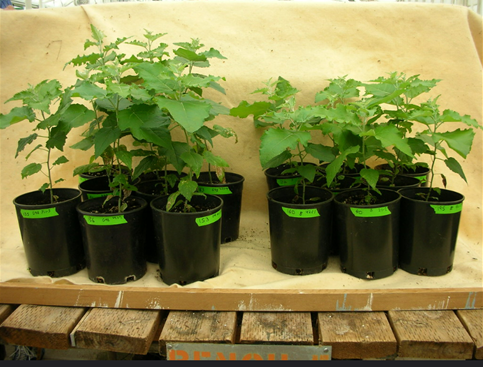
Cisgenic tress by Oregon State University

In principle, biological matter is not patentable (in Brazil this is so by Art 18(III) of the Industrial Property Law – Law No 9.279/96). However, it does not mean that an invention is not patentable just because the product and or process contain biological material. Here is then when it gets complicated and thus, the guidelines are welcome. 


Article One of the CPAPD nº 01/2022 starts by providing a definition of what ‘elite event’ means. This is done by FIVE criteria, as follow: 

 1)the event transforms a plant 

 2) through the insertion of a transgene 

 3) by using a genetic construct 

 4) been stable, in which the insertion took place at a specific location in the plant genome, and 

5) gives the plant a superior technical effect when compared to other transformation.


 Because transgenic plants are the ‘inventive concept’ that links to the ‘accessory ones’, there is the need to discuss the potential patentability of the additional inventions that derive from the main invention. 

Source INPI.

Read More

Friday, 19 November 2021

Patricia Covarrubia

Brazilian IPO – weekly news roundup

    No comments:

Read More

Tuesday, 9 November 2021

IPTango

[Guest Post] Brazil: Bill No. 12/2021 on compulsory licensing of patents


IPTango is pleased to publish a guest post by Pedro Matheus and Leonardo Cordeiro (Gruenbaum, Possinhas & Teixeira), discussing the Brazilian bill No. 12/2021 on compulsory licensing of patents in cases of national or international emergencies, public interest or public calamity nationwide.


On 11 August 2021, the Brazilian Senate approved the Bill No. 12/2021 to amend the Brazilian Industrial Property Law and regulate the compulsory licensing of patents in cases of declaration of national or international emergencies or public interest by the Executive, or recognition of a state of public calamity nationwide by the National Congress.

The Bill No. 12/2021

The Bill establishes “rules and deadlines compatible with the urgency of the situation”, as well as a “power-duty of action by the Executive when facing the declaration of a National Interest Emergency”.

However, despite the alleged noble purposes, it seems the Bill does not imply significant changes to the compulsory licensing procedure already set forth via decree No. 3.201/1999. Likewise, it’s difficult to foresee how it will objectively solve the problems concerning the acquisition of COVID-19 vaccines in Brazil.

The Bill establishes some new rules and sets deadlines regarding the compulsory licensing procedure, such as a duty of the Executive to issue a list of the patents and patent applications that could be potentially useful during an emergency or exceptional situation (article 71, §2), as well as the participation of public organizations, research, and education institutions (such as universities) and other entities in the procedure (article 71, §3). However, it is not yet clear which patents could theoretically be subject to compulsory licensing since no previous studies point out which patents could be listed to be licensed due to the new Bill.

Moreover, Brazil is not a producer of Active Pharmaceutical Ingredients (API), mainly imported from India and China. Thus, it is also not clear how to license pharmaceutical technologies to “manufacturers with proven technical and economic capability”, according to article 71, §6 of the Bill, especially considering that the vaccines currently being produced in Brazil are already subject to transnational contracts, such as the ones between Instituto Butantã and Sinovac, and Fundação Oswaldo Cruz and AstraZeneca.

In this sense, even if there are patents regarding COVID-19 vaccines to be potentially licensed, Brazilian manufacturers would still depend on importing foreign APIs and know-how, which is one of the bottlenecks of the Brazilian COVID-19 vaccination program.

The logistics of importing foreign vaccines and APIs is the main bottleneck of Brazil’s vaccination and not the exclusivity of certain products due to the issuance of patents. It is important to note that Brazil has an exemplary vaccination program due to the capillarity of its system. According to the data of the National Plan for the operationalization of the vaccination against COVID-19, there are approximately 38 000 vaccination locations around the country and a population that, majority, responds positively to the call to receive their vaccine jabs.

As mentioned above, the licensing of any patent does not seem to tackle this issue since merely licensing a technology does not necessarily provide the means to reproduce such technology immediately.

In the view above, the Bill may also have an electoral connotation. Indeed, 2022 will be an electoral year in Brazil, and one of the main criticisms of the current Brazilian government has been the acquisition of vaccines and the handling of the pandemic.

The Bill became Law No. 14.200/2021 on 2 September 2021. However, the President used his veto to override a few provisions, such as the requirement for a patent owner to transfer know-how and provide supplies of medicines and vaccines, which, according to the veto’s text, would be challenging to implement and could discourage investments in technology and the formation of strategic commercial partnerships, such as the ones already mentioned above.

Comments

The new Law aims to clarify and establish rules for a procedure that already existed in Brazilian Law (the compulsory licensing of patents), and which has been reserved for moments of crisis when a patent holder is unable to properly provide the object of a patent that is strictly necessary to tackle and overcome such situation. Nevertheless, it is not yet clear how such a procedure would apply to the current COVID-19 pandemic and if it was indeed necessary to face the current situation since compulsory licensing was already established and could have been used if it was indeed essential.

On a final note, it is necessary to highlight that the Brazilian Congress opted to establish these new rules and regulations through amendments to the Industrial Property Law. In contrast, the previous regulations were set forth via presidential decree No. 3.201/1999, following a proper legislative technique.

Thus, if there is a need to establish new rules and deadlines in the future or to amend any other provision of the regulations, such amendments would require a new bill to be approved by the Congress (Federal Senate and the Chamber of Deputies), which could take more time than the issuance of a new presidential decree.

The Law has already entered into force, but the Brazilian Congress can still maintain or overrule the Presidential decision regarding the vetoed provisions.

Credits:
First image by Alexandra_Koch from Pixabay.
Read More

Friday, 18 June 2021

IPTango

[Guest Post] The Brazilian Supreme Court defines the effects of the decision declaring the unconstitutionality of the sole paragraph of article 40 of the Industrial Property Law


IPTango is pleased to publish a guest post by Pedro Matheus and Leonardo Cordeiro (Gruenbaum, Possinhas & Teixeira), discussing the modulation of the effects of the decision declaring the unconstitutionality of the sole paragraph of article 40 of the Industrial Property Law of Brazil. Read here their post on the Direct Action for the Declaration of Unconstitutionality of such provision.


On 12 May 2021, the Supreme Court defined the modulation of the effects of the decision that declared the unconstitutionality of the sole paragraph of article 40 of the Industrial Property Law (LPI).

Read More