Welcome to our blog for Intellectual Property Law and Practice in Latin America!
¡Bienvenidos a nuestro blog de Derecho y Práctica de la Propiedad Intelectual en Latinoamérica!
Bem-vindo ao nosso blog sobre Direito e Prática de Propriedade Intelectual na América Latina!
Showing posts with label Peru. Show all posts

Tuesday, 2 August 2022

Patricia Covarrubia

Peru: the FIVE instruments of accession [I got it wrong]

    No comments:

On July the 18th we published in this blog that the executive president of the Peruvian Intellectual Property Office (Indecopi) submitted, during the Sixty-Third series of meeting of the Assemblies of the member states, five instruments of accession. 


At the time, the news was that one of them was the Geneva Act of the Lisbon Agreement (re. denominations of origin and geographical indications), and I was quick to ‘guess’ that one could have been the Madrid System. At the end I reported on others that were still pending. Well…I got it wrong, my wonderful and desirable guess was not so brilliant after all. Peru is putting this in the ‘long overdue’ to do list, and I said overdue because Colombia, a counterpart in the EU FTA together with Peru, started to work towards this back in 2012. 


The other guesses were: Locarno Agreement (re classification for industrial design); Strasbourg Agreement (re classification for patent); Nice Agreement (re classification for marks); and the Vienna Agreement (re classification for marks that consist or have a figurative element). All of them consist of international classification, which will appear in official documents and publications relating to the registration and renewals of the designs, patents, and marks respectively, the NUMBERS of the categories, DIVISIONS and SECTIONS of the Classification to which the design, patent and marks belong to. 


Photo: Proarándanos
During the encounter, Peru noted its effort to implement WIPO GREEN. This is an initiative that promotes ‘innovation and diffusion of green technologies’ (for more info, see here). The goal is to ‘connect providers and seekers of environmentally friendly technologies’ via an online platform where they can exchange information. Peru noted that they are focusing on the agro-industrial sector specifically prioritizing coffee, and blueberries. Peru has TWO denominations of origin for its coffee: Café Villa Rica and Café Machu Picchu – Huadquiña. While there is none for blueberries, this fruit has put Peru in the top list of exporters, for instance, this year has exported more than 5,000 tons of blueberries (Proarándanos). 


To read the news click here.

Read More

Monday, 18 July 2022

Patricia Covarrubia

Peru: WIPO Geneva Act

    No comments:

The Sixty-Third series of meeting of the Assemblies of the member states is taken place at WIPO headquarters (Geneva, 14th-22nd July). While the event is taken place in a hybrid format, the Peruvian delegates are present. Specifically, the executive president of the Peruvian Intellectual Property Office (Indecopi), noted face-to-face to the counterparts, ‘the initiatives and advances of Peru in the field of intellectual property’. [more info here]

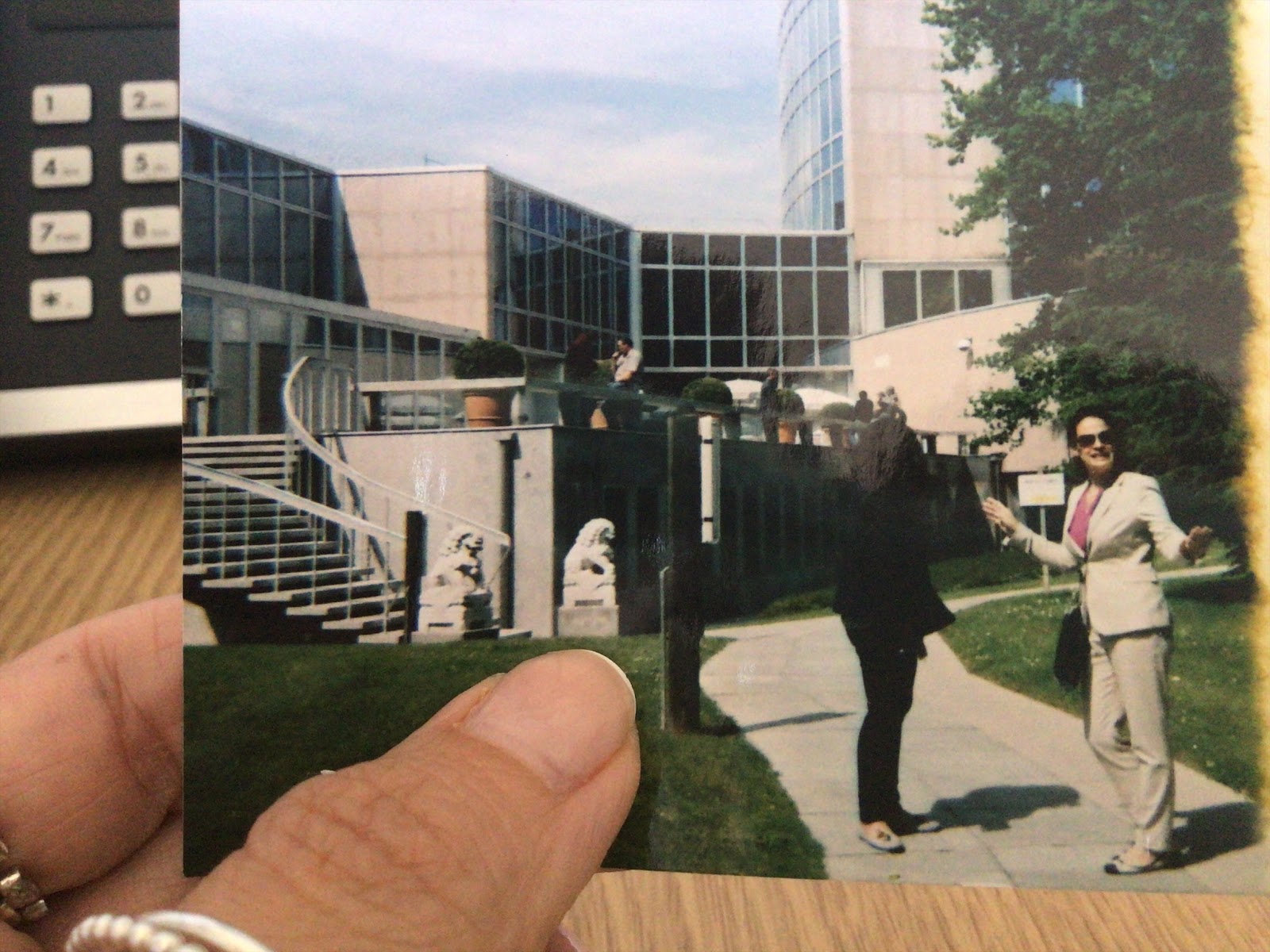
The Geneva Walk - walking towards WIPO, June 2016

In particular, it was disclosed that Peru will deposit its instruments of accession to five treaties, including the Geneva Act of the Lisbon Agreement, which shows ‘commitment as a country’. There is not other indication of what other Treaties or Agreements those would be, but if we are to guess, one maybe the Madrid System, which now covers 128 countries.  From Latin America:

  • Brazil (Madrid Protocol, October 2019; 
  • Chile (Madrid Protocol, 2022); 
  • Colombia (Madrid Protocol, August, 2012); 
  • Cuba (Madrid Agreement, December, 1989; Madrid Protocol, December 1995); 
  • Mexico (Madrid Protocol, (Madrid Protocol, February 2013). 
This is long overdue, Colombia, the first Latin America country to become a party, did it back in 2012 as a compromise - noted in the FTA with the EU (published in this blog here), which was signed same time (June 2012)  by both, Peru and Colombia (later on signed by Ecuador).


Regarding Geographical Indications (GI), the three countries, that is Colombia, Ecuador and Peru, amended and or adopted GI legislation in a manner similar to the EU. The EU deposited its instrument of accession to the Geneva Act of the Lisbon Agreement on 26 November 2019, and in force since February 2020.


Any other guess? Peru is not yet pat of the Hague Agreement, Nice agreement, Locarno Agreement, Strasbourg Agreement, Vienna Agreement, Nairobi Treaty, Patent Law Treaty and Washington Treaty – which of these, do you think they are going to go for?

Read More

Tuesday, 21 June 2022

Patricia Covarrubia

Ready, Steady…GO – the invention competition is on

    No comments:

The Peruvian IPO (Indecopi) launched this week the XXI National Invention Competition 2022 . The call is for all inventors and innovators who have until September 27, 2022 to submit their application. This initiative, which is in its 22nd edition, aims to encourage and recognize the inventiveness and ‘creative spirit of Peruvian inventors, researchers and entrepreneurs’. The contest offers three categories and offers a cash prize to the winners for a total of USD 5,000. 


The categories:

  1.  First Place Award, distinguishing the national ‘invention that is considered the most outstanding’, assessed as exceptionally due to the ‘potential economic, social and commercial/productive impact that it can generate’. 
  2. Green Patent Award, recognizing the invention with a great applicability in the area of environment and or climate change. 
  3. Peruvian Inventor Award which recognizes women in the field – this could be an individual or a group of only women, which invention is ‘considered the most inventive and with the greatest potential impact for the country’. 
To participate in this exciting event, you shall have a patent application pending at Indecopi - between January 1, 2021 and September 27, 2022, and not have participated in previous editions of this competition. 


Good luck my Peruvian friends! May the odds be in your favour. 


More information here

Read More

Thursday, 16 June 2022

Patricia Covarrubia

oriGIn on Geographical Indications compilations

    No comments:

Yesterday afternoon I attended the event on oriGIn worldwide GI compilations. It comprises several speakers from around the world but relatable to Latin America, Sergio Chuez from INAPI was present.


The welcoming was led by Erik Thevenod-Mottet from the Swiss IPO, followed up by Massimo Vittori representing oriGIn. The idea was to share the wonderful tool, that much needed, GI compilation. The talk started by ‘some figures’ 

1. recognising that there are over 13,000 GIs around the world [oriGIn has compiled 9,047 – that are ‘recognized’], and here I made a pause. It was an important remark made by Massimo that ‘recognised’ may not label it as ‘registered’ as some countries may not legally registered a particular GI but still there is recognition. This is important to know because a GI is appreciated by us, society/consumers and while perhaps a GI has not obtained the legal status of registered GI, it still, in our minds, has goodwill. 

2. There are different legal systems, mainly sui generis around the world that protect GI e.g. China, the EU, Africa (OAPI), the Andean countries (South America), Canada, Mexico, Chile, etc 

3. GI is applicable to several sectors not only agro-products but also includes non-agricultural products such as craft [Brazil protects services too] 

4. International legal frameworks are in place: TRIPS, Lisbon Agreement and more recently the Geneva Act 

5. There are over 200 bilateral agreements covering GIs [mainly they follow the bilateral agreement between France and Germany signed back in the 60s - adding an annex with a list of GIs]. 

Massivo moved to explain how the search works (database can be accessed here). I must say that I have tried and it is not complicated at all [I do not consider myself tech-savvy] and it is, I may say ‘ straightforward’. You may search by regions (e.g., South America (you can see all 444); Central America (with 74), etc), or by country. There is also interesting data such as ‘legal protection’ under which the said GI is protected, for instance, sui generis, trade marks, legislative act, etc; as well as per ‘type of product’. Under this, I have been intrigued by ‘services’, knowing the case of ‘Porto Digital’ in Brazil reported in this blog here. The data shows THREE GIs for services; aside from the Brazilian case, there is one in Chile ‘Calidad Aysen Paragonia-Chile (protected as a trade mark); and another, that of ‘Duzdag’ from Azerbaijan as a sui generics GI. Under types of products there is a very meticulous selection e.g., food products/dairy; food products fruits; food products/vegetable oils and fats; non-food product/ wood; non-food product leather; etc. There are 7846 GIs protected under sui generic rights which Massivo asserted is a legal system which is more robustic and solid. 


While I (virtuality) attended all speakers, I engaged with a couple of question when Chuez spoke about the work they do at the INDECOPI. Relating to this report today was the fact that by mere coincidence, yesterday morning I had published in this blog, about collective marks, and the QR code as well as the application been done for free. I therefore asked if there were any incentives for nationals to apply for GIs, here is the answer: ‘…[while GI applications are not free], we offer free and complete technical assistance for the filing, including the organization of the regularity council’ . This is indeed a pretty good offer, and I am sure many micros and SMEs do and will benefit from this. Peru, as many other countries in Latin America, is rich on natural resources and traditional knowledge. Yet, as of today, there are only 10 national GIs: ONE for a spirit, ONE for handcraft and EIGHT for food related products. 


If you attended the event, what are your thoughts? The next GI event would be in Montpellier (5th July), I will be in (physical) attendance, would you? More info on the Worldwide Perspectives on GI here.

Read More

Wednesday, 15 June 2022

Patricia Covarrubia

Peru: QR codes for Collective Marks and enhancing Micro Enterprises

    No comments:
As part of the project run by the Peruvian IPO (INDECOPI), that is ‘Collective Marks Brand Promotion’, the office continues to advertise that by registering a collective mark, INDECOPI designs and produce their QR code for free. 

Such QR code will allow customers to learn about the association or cooperative that owns the collective mark and of course to learn about the product offered e.g., the product’s characteristics, its history, membership (who they are), business contact details, in what market the products are traded, etc. 

Micro enterprises 
In general, as any other IPO office, the INDECOPI provides a good platform aiming to favour ‘economic reactivation of entrepreneurs, businessmen and micro enterprises in the country’. That said, this month, it prepared an event where 222 registrations of collective marks were handed in. It is therefore noticeable that INDECOPI continues to provide a helping hand to micro enterprises which are abundant in the country, especially in the artisanal sector and other rural productions. [micro enterprises have at mots 10 employees. As a curious note, small and medium enterprises represent 99% of all business in the European Union , yet in 2021 micro-enterprises have a turnover of Euro2 million – see the European Commission report here). In Peru, there is an exemption from the payment of the fee for processing the collective mark applications which was in force until September 2019 -- such payment was definitively eliminated in December 2020. 

 INDECOPI reports that up to April 2022, there are 5761 collective marks registered noting that many of these association and cooperatives are formed by women. 

More info click here [in
Spanish]
Read More

Monday, 13 June 2022

Patricia Covarrubia

Peru: Football and Intellectual Property

    No comments:
This week we have two news related to football. The world cup always brings some technological advances that result in better sporting equipment e.g., Brazuca (the official ball of the 2014 World Cup that was invented to improve the aerodynamics and to make it water resistant). Adidas has been championing the football ball, but we do not hear much about small ‘players’, are they also innovating? Hernan Garrido Lecca, a Peruvian writer, producer, and inventor this year obtained a ‘utility model’ patent (Resolution N°000889-2022/DIN-INDECOPI) for ‘a highly competitive football jersey that helps players "kill the rebound" when receiving the ball with their chest during long passes. Garrido is using the Patent Cooperation Treaty (PCT) to protect his invention internationally (see info here at INDECOPI).

In the same line, at the Peruvian IPO (INDECOPI) YouTube Channel, I watched ‘Dreams of Entrepreneurships’: The story of ‘Pragol’ a registered trade mark. Carla Paredes, a young woman who has always be passionate about football, grew up on an environment where football was not meant to be played by ‘girls’ – so she was told, and to play with dolls instead. Paredes, now is a entrepreneur who developed the mark ‘Pragol’ for urban clothing’. The mark is dedicated to female football fans, supporters and players and thus, a mark that inspire girls to follow their passion for football ‘without stereotypes’. Her aim is to ‘change the misperception that football is only for men’. One of her first steps was to register her mark – she notes, ‘nobody will steal this football dream from me’.


Picture adopted from Paredes's Instagram account

Read More