Welcome to our blog for Intellectual Property Law and Practice in Latin America!
¡Bienvenidos a nuestro blog de Derecho y Práctica de la Propiedad Intelectual en Latinoamérica!
Bem-vindo ao nosso blog sobre Direito e Prática de Propriedade Intelectual na América Latina!
Showing posts with label Nagoya Protocol. Show all posts

Tuesday, 18 August 2020

Verónica Rodríguez Arguijo

Upcoming events on this week!


WHAT’S GOING ON THIS WEEK? 

On 19 August 2020, the webinar Relevant topics regarding the new legislation on copyright (in Spanish) will be streamed on Facebook. The event is part of the Permanent Seminar on Intellectual Property 2020-2 (PSIP) which is organized by the Legal Research Institute (IIJ) of the National Autonomous University of Mexico (UNAM). The speaker is Hugo Contreras Lamadrid, Director General of the National Institute of Copyright (INDAUTOR). 

On the same day, the webinar Judging Intellectual Property - Interactions between Justice, Copyright and Industrial Property will be streamed on YouTube. The event is organized by the World Intellectual Property Organization (WIPO), the Brazilian Association of Industrial Property Agents (ABAPI), the National Justice Council of Brazil (CNJ) and the Ministry of Foreign Affairs of Brazil. The speakers are Marcia Maria N. de Barros (Federal Regional Court of Rio de Janeiro), José Carlos Costa Netto (Court of Justice of the State of São Paulo) and Richard Pae Kim (CNJ). The moderators are Marcelo Goyanes (ABAPI) and Heitor Figueiredo Sobral Torres (Ministry of Foreign Affairs). 

On 20 August 2020, it will take place the webinar: The new route of our Tequila, our Coffee, our Rum: a commercial perspective (in Spanish). The event is organized by the Inter-American Association of Intellectual Property (ASIPI). Some experiences concerning the Tequila Regulatory Council (CRT), the Colombian Coffee Growers Federation (FNC) and the National Association of Alcohol and Spirits Manufacturers (ANFAL, Guatemalan Rum) will be shared. The speakers are Ramón González Figueroa (CRT), Paola Romero (FNC), María Mercedes Sánchez (ANFAL) and María José Sánchez (FNC). Jorge Chávarro will moderate the session. 

The webinar Key aspects for investing in technology ventures (in Spanish) will also be held on 20 August 2020. The event is organized by the National Institute of Industrial Property of Chile (INAPI Chile). The speakers are Pamela Chávez and Pablo Fernández. Register here

On the same day, the Brazilian Intellectual Property Association (ABPI) will hold the webinar Secondary Meaning, Vulgarization and the INPI (in Portuguese). The speakers are Carlos Eduardo Neves de Carvalho, Silvia Rodrigues (INPI) and Lelio Schmidt. Register here

Last but not least, the webinar Guide to WIPO Services for the .CN and .中国 (China) ccTLD will take place on 20 August 2020. The event is organized by the World Intellectual Property Organization (WIPO). The webinar will address the basic aspects of filing “.CN” and “.中国” domain name complaints against cybersquatters. 


PAST EVENTS 

Did you miss some events held the last week? The following are still available on-demand: 
  • 12 August. Webinar: Indigenous Communities and Copyright (in Spanish), organized by the National Institute of Copyright (INDAUTOR). Speakers: Hugo Contreras Lamadrid (INDAUTOR), Juan Miguel Ruiz Pérez (INDAUTOR) and Nancy Clara Vásquez García (Äats hilando caminos). 
  • 12 - 13 August. Webinar: Intellectual Property as a tool for promoting the national identity of countries (in Spanish), organized by the Latin American School of Intellectual Property (ELAPI). Some speakers are Ronald Gastello (INDECOPI), Ray Meloni (INDECOPI), María José Lamus (SIC Colombia), José Andrés Tinajero (SENADI Ecuador), Silvana Sánchez (SENAPI Bolivia), and Luis José Diez Canseco Núñez (Technological University of Peru). 
  • 13 August. Webinar: Ratification of the Nagoya Protocol - First Impressions* (in Portuguese), organized by the Brazilian Intellectual Property Association (ABPI). Speakers: Professor Bráulio Dias (University of Brasilia) and Ana Paula Viana (Natura). Moderators: Luiz Ricardo Marinello and Alex Gonçalves de Almeida. 
* The webinar details were added to the page “Events” on the IPTango website after the weekly article was published. 


If you have a craving for more, review the full list of events here

Image of Becca Clak on Pixabay.​​
Read More

Monday, 7 May 2018

Patricia Covarrubia

Pasuchaca: a known substance for a not so new use - will the JPO grant a patent?

    No comments:

From Peru, we hear about the work that the National Commission against Biopiracy does. This Commission, which is part of the National Institute for the Defense of Competition and the Protection of Intellectual Property (INDECOPI), is unique in the world and its role is to search the patent offices of all countries, in order to identify patents and, applications for patents, in which either Peruvian biological resources or traditional knowledge are involved.


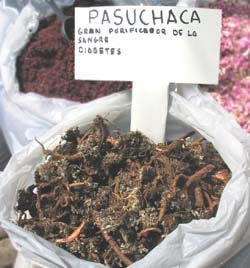
Image result for pasuchacaDoing their role, the Commission recently identified a potential case of biopiracy in Japan. Towa Corporation submitted an application for a patent to the Japanese Patent Office (JPO). The request was filed under the description ‘Agent to increase HDL cholesterol levels’, and referred to an extract from the Pasuchaca (Geranium dielsianum) which is of Peruvian origin. The Commission further argues that the application lacks ‘inventive step’ (it is obvious for a person skilled on the art).

Following this, the Foreign Ministry informed the Commission that it has received a communication from the JPO. This communication informs that the ‘patent application related to the Pasuchaca has not yet been examined and that it will take into account the observation submitted by Peru’.

Pasuchaca, is it novel and or obvious (inventive step)?

Typing the word ‘pasuchaca’ in the search engine Google, many hits appeared, referring to it as ‘medicinal plants’. The majority of sites noted that it is used for diabetes treatment and many others sites if not all, referred to it as a Peruvian plant. There are therefore, 2 issues to consider here:

  1. Access to Genetic Resources: Japan is a member of the Nagoya Protocol on Access to Genetic Resources and the Fair and Equitable Sharing of Benefits Arising from their Utilization to the Convention on Biological Diversity. This legal instrument (soft law) is an international agreement that aims at sharing the benefits arising from the utilization of genetic resources in a fair and equitable way. Therefore it is expected that the authorities request the applicant to provide for the disclosure of origin of genetic resources as a requirement for patentability of such resources (and/or associated traditional knowledge); and
  2. Pasuchaca has been ‘used’ by ancient Peruvians for the diabetes treatment [novelty ruined, but can still be patentable: new use of a known substance]. Therefore potentially Pasuchaca may have that inventive step needed as it happen in the case of MACA for hair growth agent and also as an anti-age cream [both products patented by NATUREX, this is so because the use of MACA had nothing to do with previous knowledge - serendipitous]. Will Pasuchaca have the same fate? I then proceed to add to my search the word ‘cholesterol’ and… the site ‘peruherbals.com’ claims that Pasuchaca is an * Effective hipoglucemiant, * Excellent for diabetes and pancreas, * Reduce high cholesterol (more info click here). Is it then obvious that as Pasuchaca reduces the bad cholesterol, it increases the good cholesterol [as claimed in the Japanese application?]. We'll have to wait to see the JPO decision.

Source INDECOPI.
Read More

Tuesday, 14 November 2017

Patricia Covarrubia

Heritage Across Borders

    No comments:
The above conference has been advertised by the UK Society of Legal Scholars (SLS) as well as other forums.

I would like to further up upon this since I am co-ordinating three sub-sessions in this exciting Conference taking place in China. They are under the session Tangible and Intangible. The invitation is as follow:

Intellectual Property and the Protection of Intangible Cultural Heritage: Emerging Themes and Challenges in Transboundary and Diaspora Contexts
Since the Intangible Heritage Convention was adopted by UNESCO in 2003, intangible cultural heritage (ICH) and its parallel concepts such as traditional knowledge (TK) and traditional cultural expressions (TCEs) have been increasingly important subjects of debate in several other international forums, such as WIPO, CBD (including its Nagoya Protocol), WHO, and the WTO. As more countries implement the Convention, national policy-makers and communities of practice have been exploring the use of intellectual property (IP) protection to achieve ICH safeguarding outcomes (as well as other political and economic goals). For example, inscription of ways to make food and craft products on the Lists of the Convention is often associated with efforts to register geographical indications to protect use of the names of those products.
The intersection between ICH safeguarding and IP protection raises questions about the nature of ownership or stewardship over ICH, the appropriate nature of any kind of IP protection, and its likely effects. Many of these issues have been discussed in the context of the WIPO Intergovernmental Committee on Genetic Resources, TK and TCEs, but there has been relatively little debate about protecting IP rights in transboundary heritage, especially concerning safeguarding under the UNESCO Convention. Much ICH is shared (and contested) across national borders, and can easily be translated to and practised in new locations, which poses challenges for protecting IP rights, especially in the absence of widely-ratified international agreements.
This session will consider various strategies (legislative or otherwise) to establish and/or protect IP rights over ICH in transboundary and diaspora contexts, and how they might affect efforts to maintain practice and transmission (safeguarding) of that ICH. Session papers may present case studies of IP protection regarding transboundary ICH, and/or the role of measures such as provisions for mutual recognition and national treatment, IP chapters in international, regional or bilateral trade agreements, contractual agreements under the Nagoya Protocol, and ethical guidelines and dispute resolution mechanisms. Papers may include references to all forms of intellectual property, including patents, copyright, design rights, trademarks (certification marks and collective marks), geographical indications, and sui generis rights.

The session will involve a triple session (two speaker sessions and one panel session). The speaker’s session will consist of 4 people each, and the panel session (single session) will consist of 8 speakers with a special focus on food heritage and IP protection.

Deadline for submissions: Thursday 30 November 2017

Let me know if you need more information. You can communicate to me informally about any project you feel will be suitable to the conference (or anything else – IP related of course :0).

More information here.
Read More

Monday, 3 November 2014

Patricia Covarrubia

Biopiracy: a decade to celabrate

    No comments:
Peru is celebrating the 10th anniversary of its National Anti-Biopiracy Commission. The said Commission is chaired by the Peruvian National Institute for the Defence of Competition and Protection of Intellectual Property (INDECOPI).


The Anty-Biopiracy Commission aims to protect the Peruvian genetic resources and traditional knowledge (TK). It does so by “tracking, identifying and combating biopiracy cases occurring worldwide and affecting cultural and biological diversity.” INDECOPI acknowledges that the Commission is unique in the world; it searches through patent offices in all countries in order to identify patents which may involve Peruvian biological products or Peruvian TK. Once this is identified, opposition to this application starts. If patent has already been granted, the Commission would applied for the patents to be annulled.

INDECOPI reports that up to today, the Commission has “analysed more than 7000 patent documents related to 69 biological resources of Peruvian origin”. That said, the Commission is not opposed to the use of Peruvian biological resources and/or TK. What the National Anti-Biopiracy Commission aims to, is to make sure that the use of the genetics resources and/or TK are “used legally and with a fair contribution for the benefit of sustainable development of the country and especially the native communities.”

Peru ratified the Nagoya Protocol which became effective last October (12th).

More information @INDECOPI.
Read More