Welcome to our blog for Intellectual Property Law and Practice in Latin America!
¡Bienvenidos a nuestro blog de Derecho y Práctica de la Propiedad Intelectual en Latinoamérica!
Bem-vindo ao nosso blog sobre Direito e Prática de Propriedade Intelectual na América Latina!
Showing posts sorted by date for query panama. Sort by relevance Show all posts

Thursday, 27 October 2022

Patricia Covarrubia

Mexico: Plagiarism and traditional cultural expression

    No comments:
I received an email yesterday morning with a link to the BBC Latin America News. I am always skeptical to open links due to virus (are you not?). On second thoughts, I read the link and it was clear that was a verified page and when I clicked there were some juice news for our blog 😊 The heading reads: “Ralph Lauren apologises after Mexico indigenous 'plagiarism' claim”. My reaction was, not again! It has become usual to see big business appropriating cultural designs. But I wonder whether this is due to social media and we, as a society, are more aware of it. The era of globalization surely has made us more aware of what is going on in every corner, but also may have brought in us an appetite for merchandise that is only available in certain regions, or cultures [would you agree?]. 

Back to the news. 
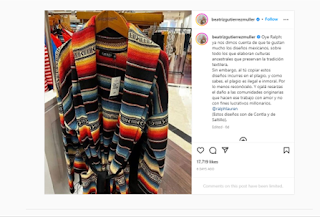
The wife of the Mexican President wrote on Instagram below the photo of the claimed item
“Hey Ralph: we already realized that you really like Mexican designs, especially those that are elaborated by ancestral cultures that preserve textile tradition. However, by copying these designs you incur in plagiarism, and as you know, plagiarism is illegal and immoral. At least acknowledge it. And hopefully you will compensate the damage to the original communities that do this work with love and not for millionaire profit. @ralphlauren (These designs are by Contla and Saltillo.)”
[translation, my own] 

Let’s put our IP hat on: is this plagiarism? Is there an infringement? Traditional cultural expression as such is not protected under the umbrella of IP. Yet, WIPO’s Intergovernmental Committee (IGC) on IP and Genetic Resources, Traditional Knowledge and Folklore is working on an international instrument for their protection. [for the drafts go to this page here). The matter is that IP has a period of protection (full stop). That is the terrible reality that traditional knowledge in general suffers. Added to this, is the fact that even if it were protected by let’s say copyright, there is the argument of ‘inspiration’ that designers rely heavily on. However, there is a fine line between ‘inspiration’ and ‘copy’, and this has been reflected more in recent years (or at least we have become aware of it). 
For instance, three months ago, we brought to you the news of Mexico vs Shein, for a garment deemed to be copied by the latter which contained Mayan’s traditional culture. Two years ago, we also posted about the Guna people in Panama vs Nike which contained a ‘mola’ design. I am sure there is not enough space to tell you all about this situation that seems to happen all over again, and again. 

Back to the news
Ralph Lauren has apologised and noted that months ago they remove it and were surprised to see the final products on display. This may be the end of the story, but not for the communities around the world. While waiting for the WIPO international instruments, there is nothing stopping governments to pass their own national laws protecting their traditional knowledge. Yet, this would be protection on their national territory, I am afraid, but at least, it is something. 

The suspicious link sent here.
Read More

Friday, 29 July 2022

Patricia Covarrubia

Mexico: cultural (mis) appropriation

    No comments:
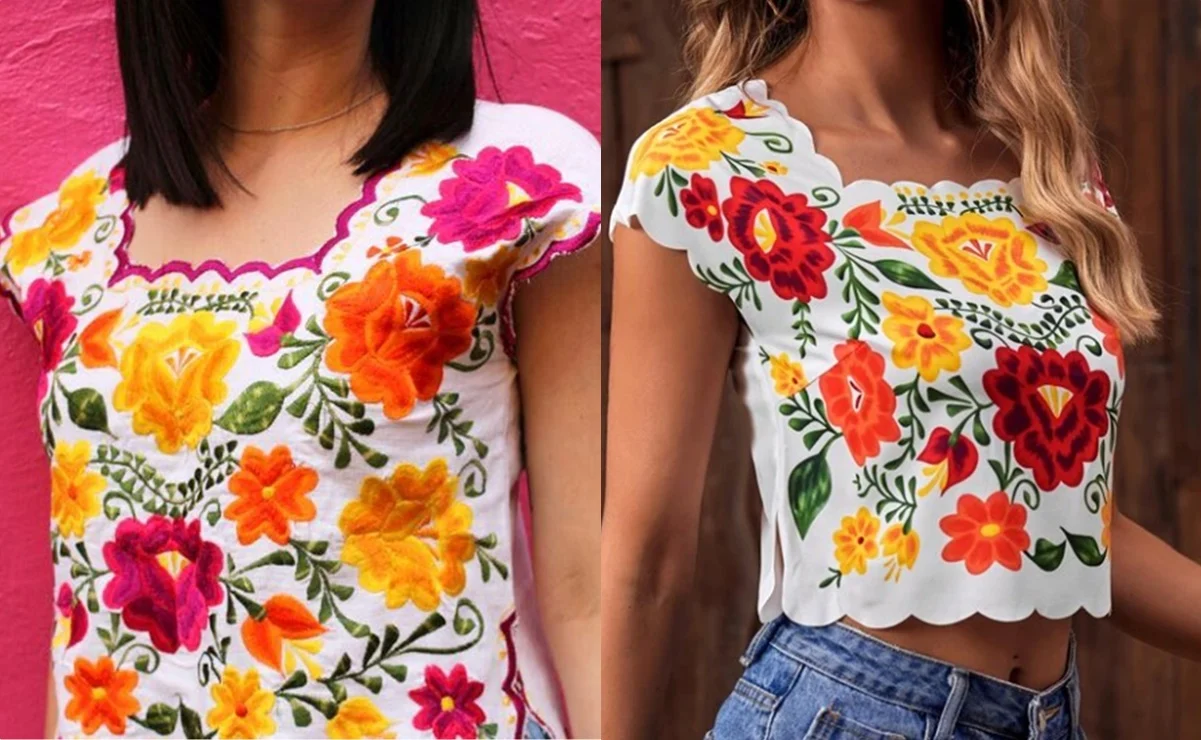
Last week, the Mexican Secretary of Culture sent a letter to the company SHEIN asking to clarify the launch of the piece “Flower trim top with floral print” that is identical to a garment designed by the handicraft brand ‘ YucaChulas’.

The statement reads ‘” cultural elements whose origin is fully documented’, which generate economic rewards in the communities that sell them. The blouse, short huipil, was created in the Mayan communities of Yucatan, Campeche and Quintana Roo, and its design would not be possible without knowledge “transmitted from generation to generation, product of the collective creativity of the Mayan people.”’ YucaChulas also went to social media (here) to express their dismay against SHEIN due to the lack of recognition of the work made by local artisans and how plagiarism diminish and devalued their culture. Since then, SHEIN has removed the garment and noted in a statement that it was not their intention ‘to infringe anyone’s valid intellectual property and it is not our business model to do so.’

Photo: El Universal - YucaChulas left; SHEIN to the right


As you know, the protection of cultural expression through intellectual property is a heated debate. And now, WIPO has advanced in this topic – see early publication here. In the meantime, some countries, especially in Latin America, have some kind of legislation that regulates the use of traditional knowledge, but yet there is not clear procedure or enforcement, it seems like just ‘good practice’. However, one must say that the Panama Law No. 20 on the Special Intellectual Property Regime with Respect to the Collective Rights of Indigenous Peoples to the Protection and Defence of their Cultural Identity and Traditional Knowledge, seems a solid one. Others, like Colombia, continues to use Geographical Indications protecting cultural expressions and traditional knowledge, although this protects the product linked to the origin, rather than the product per se. The same strategy is used in Peru, where you will notice several ‘collective marks’. Yet, IP is territorial and these legal tools, used in Panama, Colombia and Peru as examples, only will stop the ‘plagiarised’ product to be sold in their countries, but can continue to sell it in other jurisdictions. [sad]

Read the news at El Universal MX
Read More

Friday, 11 September 2020

Patricia Covarrubia

Today! Don't forget the 'event' TK and IP

    No comments:

 As noted early on the week under 'upcoming events on this week', today is the day to attend the webinar by the World Intellectual Property Organization (WIPO) E-commerce and Intellectual Property for Indigenous Peoples and Local Community Entrepreneurs. 

I will be in attendance, will you?

The majority, if not all of our countries in Latin America are rich in genetic resources and traditional knowledge. Many do indeed protect traditional handicraft under Geographical Indications and for instance, Panama has a sui generis Law 20 (2020) which aims to protect TK and TCEs.

In Brazil, there are many local products that have benefited from GI protection (as a sui generis system), and some of them were globally seen in the Olympic games Rio 2016 (opening ceremony). Here you can see a very helpful map of GIs in Brazil.

In Colombia, there are 11 Denominations of Origin granted to handicraft, one of them is the weaving products 'Wayuu' referring to the Wayuu indigenous people. Check out (here)  the list of DOs already granted in Colombia. 

For more inside in how TK is seen as economic activity, check out this paper (available here) that I wrote back in March 2019 (IIC). Remember, GI has the potential to benefit rural communities, but there is some instance that there is no gold at the end of the rainbow. 


Read More

Sunday, 30 August 2020

Verónica Rodríguez Arguijo

ASIPI launches the interactive map of AOs, GIs, collective and certification marks


The Inter-American Association of Intellectual Property (ASIPI) launched the interactive map of appellations of origin (AOs), geographical indications (GIs), collective and certification marks of the Americas.

The Committee of Geographical Indications of ASIPI carried out the project which aims “to provide a tool that, in addition to being a source of consultation, would allow interaction for feedback and permanent updating”. 

The interactive map allows to sort per country, and it is available in Spanish and English. A brief description of the GIs, AOs or marks is displayed when they are selected, and the relevant regions are highlighted on the map. 

So far, the AOs, GIs, collective and certification marks* of the following countries are available on the map: 
  • Argentina 
  • Belize* 
  • Bolivia 
  • Brazil 
  • Chile* 
  • Colombia, 
  • Costa Rica* 
  • Cuba 
  • Dominican Republic 
  • Ecuador 
  • El Salvador 
  • Guatemala 
  • Jamaica 
  • Mexico 
  • Nicaragua 
  • Panama 
  • Peru 
  • Puerto Rico 
  • The United States* 
  • Venezuela 
ASIPI encourages to submit here and here any updates or additional information concerning the map. 

Image of Arek Socha on Pixabay.
Read More

Monday, 27 May 2019

Patricia Covarrubia

The Guna people to Nike: Just don't Do It

    No comments:
@Isaac Larrier
A limited edition by sportswear Nike is a trending topic. The shoes were to be a tribute to Puerto Rico but the Guna people, the second largest indigenous community in Panama, objected to the design. The said design was a ‘mola’, which is a protected traditional design by the community. The design in question are the traditional 'mola' patterns which feature colourful, swirling designs and geometric or figurative drawings. This art is ‘passed on stitch by stitch from mothers to daughters and bears witness to the Guna vision of the cosmos and their harmonious relationship with nature’.
Read More

Monday, 28 January 2019

Patricia Covarrubia

The battle of Pisco

    No comments:
Peru has scored once more in the international recognition of Pisco, their national drink.
The Registry of Industrial Property of Guatemala recognized Pisco as a Denomination of Origin (DO) produced in Peru. By Guatemala recognising Pisco as a drink from Peru, it prevents the registration of the name and any marketing of Pisco within the Guatemalan market if it has not complied with the Peruvian national regulation.

Back in 2017, 'Pisco' was declared Cultural Heritage of the Peruvian Nation (Law 30639). In the same year, the DO Pisco was also granted (by The Peruvian Institute for the Defense of Competition and Protection of Intellectual Property INDECOPI) the character of ‘reputable mark’ due to its well-known status.

It is relevant to mention that Pisco is original to Peru as it is original to Chile – therefore there is a long battle between these two countries over the name ‘Pisco’. Pisco has obtained DOs in both jurisdiction as an original and native drink. Some countries would recognise Pisco as coming from Chile and others, from Peru, but not from both countries at the same time, except the EU. This is so because the EU registered Peruvian Pisco as a DO but acknowledged a previous trade agreement (2002) between Chile and the EU in which Pisco was recognized as a DO from Chile. The note clarifies that the protection granted to "Pisco" as a DO to Peru does not hinder the use of that name for products originating in Chile.

Malasia recognizes Pisco as a DO from Peru as well as, Israel, Nicaragua, Algeria, Cuba, Georgia, Haiti, Bolivia, Colombia, Ecuador, El Salvador, Guatemala, Panama, Dominica Republic, Venezuela, Nicaragua and India (since November 2018). However, Costa Rica, United States, China, Malaysia, Singapore, Thailand and Vietnam recognize Pisco as a DO from Chile.

More information about Pisco here.
Read More

Wednesday, 30 August 2017

Patricia Covarrubia

Politics and IP. Regulation and IP. Just Two of the Topics Up for Discussion in Cartagena This October!

    No comments:
Highlighted recently here on IP Tango, the International Trademark Association (INTA) will be hosting its Changing Landscape of Latin America conference in Cartagena, Colombia, on October 2–3.

Serving on the conference project team, Iris Quadrio (Marval, O’Farrell & Mairal, Argentina) and Urko Ochoa (Minino, Dominican Republic) contributed to the educational program and will be moderating a number of the sessions during the conference. The conference will be presented in English.

Moderated by Ms. Quadrio, a session titled “Politics and IP – Navigating This Unlikely Pair,” will feature Luiz Henrique O. do Amaral (Dannemann Siemsen, Brazil) and Prof. Dr. Gustavo Juan Schötz (National Director of Copyright, Ministry of Justice and Human Rights, Argentina). This session ties in closely with the theme of the conference, as it touches upon the changes that are reshaping the political landscape across Latin America, with Brazil transitioning towards presidential elections in 2018 after a particularly difficult period, and Argentina and Peru signaling important developments after their respective new administrations took office.

Speakers will delve into the changing political and economic landscape and its impact on issues such as the negotiation of agreements as they relate to intellectual property (IP) and trademarks, including the relaunch of Mercosur/EU trade talks. This discussion will also cover the role of the new trademark and IP authorities in Latin America, with their own list of priorities and reform projects, bringing participants up to date on the most recent changes and developments in the region.

Mr. Ochoa will lead a panel of experts comprising Melissa Pérez de Patterson (Procter & Gamble, Panama), Sergio Barragán (Pepsico, Mexico), and Rodrigo Velasco (Alessandri Abogados, Chile) in a session concerning the balance between IP rights and the increasing regulatory landscape. They will discuss a numbers of issues raised as a consequence of the new regulatory regimes which are expanding in the region, the corresponding restrictions for IP rights, and how IP owners and practitioners are facing the new challenges. Participants should expect to receive a clear regional overview of the matter, as well as the conflicts arising from the overlap between IP and regulatory provisions (such as packaging claims, use of characters, and other restrictions), and expectations for future developments.

Following the conference, on October 4, INTA will host a workshop, Free Trade Zones: Commerce vs. Counterfeits, during which brand owners, free trade zone authorities, government officials, and other stakeholders will explore the ongoing threat of counterfeiting in free trade zones.


Register here to join INTA in Cartagena this October.

Post written by INTA. 
Read More

Monday, 6 March 2017

Patricia Covarrubia

France and Peru present cooperation action

    No comments:
A bilateral cooperation was signed by France and Peru back in 2015. The cooperation was in the field of intellectual property (IP) and economic development. Because of this, last week the 2017 Work Plan was signed.

Image result for france and peruThe plan includes: “information exchange, training of professionals in intellectual property, program to support companies in the use of the patent system, exchange of experiences in geographical indications, as well as strengthen the fight against piracy and the promotion of technological innovation.” There will also be a joint work with the Comité National Anti-contrefaçon which is the French Anti-Piracy Committee.

One exchange of information that caught my attention was addressed to geographical indication which will include the functioning of the ‘regulatory associations’ in the country. Thus, an official from INDECOPI will be trained at the Centre for International Studies of Intellectual Property (CEIPI) in France. The French has protected for centuries GIs e.g. XIV French legislation protecting ‘Roquefort’.

GIs in Latin America
Some Latin American countries have GI system which are controlled by the Government and/or owned by the state, e.g. Guatemala (art.81 Decree No.57/00), Mexico (art.167 Ley Propiedad Industrial), Panama (art.137 Ley No.35), and Peru (art 88 Decree No.1.075/08). This is a major point since farmers, artisans and Indigenous peoples mistrust government. In France the holders of an appellation of origin are the producers and groups of producers enjoying the appellation of origin in question. In Peru the state is the holder.

Peru on GIs
Peru has registered the handicraft Chulucanas (DO) for ceramics located in the town Chulucana (Resolución 011517). The association hold a national registration and also an international registration. Peru is part of the Lisbon Agreement and as such once chulucanas were protected in the country of origin the country requested its international registration at the International Bureau of WIPO, which keeps the International Register of Appellations of Origin – thus, chulucanas must be protected in all countries of the Lisbon system. There are 28 members and 6 are from Latin America.

EU on GIs
In the EU GIs are regulated separately from the TM system. Wines and aromatised wines - Regulations (EU) No 1308/2013 and 251/2014; Spirits - Regulation (EC) No 110/2008; and Agricultural products and foodstuffs - Regulation (EU) No 1151/2012. There is no protection for handicraft (as there is in Peru). However, EU is discussing the extension of GIs to protect non-agricultural products as well (see the 06/10/15 resolution adopted by MEPs). Around 25 per cent of the registered GIs in Latin America are for non-agricultural products. This is not a contravention. Actually the TRIPS Agreement and the Lisbon Agreement invite Member States to protect GIs. These agreements do not differentiate among GIs for agricultural and non-agricultural products. Yet in the Doha Round two matters were raised in regards to GIs: 1) Extending the higher level of protection beyond wines and spirits; and 2) to establish a multilateral register of GIs for wines and spirits which would be legally binding for all WTO members.

Source INDECOPI.
Read More

Tuesday, 21 February 2017

Patricia Covarrubia

Oops Panama did it again!

    No comments:
We have some news from Panama, again! It was recently that we became aware of a patent regional initiative that was taking place in Latin America as part of CAF (Development Bank of Latin America). A little reminder: because of the low performance of the region in the development of own innovative technologies, CAF aimed to establish a regional program– to reverse this trend. What CAF did was to identify and prioritize certain factors/indicators such as: International patent applications (PCT); Patents granted in important markets; Royalties arising from the licensing of IP; and High technology exports. Once the data was collected the next step was to do a comparative analysis with other regions: Asia, North America and Europe.
Image result for welcome to panama
A few days ago Álvaro Atilano, the coordinator of the Technological Patents Regional Initiative for Development, informed us that "Panama added 84 technological concepts, with which the country is getting ready to start the patent application process required by international agencies to achieve their registry."

February, all hands in: the CAF Method for the Accelerated Development of Patents.
This regional initiative led by CAF and carried out by the National Secretariat for Science, Technology, and Innovation saw in weeks time "the participation of 90 people from 16 companies of the private sector and state institutions. They were provided with 66 hours of instruction, which were helpful to create, design, structure, and present their innovative ideas with the objective of registering them through the Patent Cooperation Treaty (PCT)." Indeed, as Atilano put it, it was a 'useful week'.

Atilano added that the institutions became more aware that Panama can generate highly innovative ideas. He noted that participants came up "with a series of technological concepts that have good possibilities of being patented. These results, added to those of last year, when we obtained 136 technological concepts, help position Panama with respect to the registration of technological patent".

The CAF Method for the Accelerated Development of Patents seeks to 1)break the currently existing paradigms in the region regarding innovation; and 2)how to conceptualize patentable technologies, including drafting quality patents. CAF has previously used this method (accelerated development of patents) in Medellin, and Monterrey.

Thanks Atilano for passing this news - you did it again! well done.

For more information see here.
Read More

Thursday, 26 January 2017

Patricia Covarrubia

Where the INTA Leadership Meeting is leading?

    No comments:
We have today a magnificent opportunity to post the opinion of one of the Latin American leading firms. Alvaro Ramirez Bonilla (B&R Latin America) has taken the trouble to write about the recent INTA Leadership Meeting. The Leadership Meetings are by invitation only and here is what he has to say:
This year we had the largest Leadership meeting ever. The first time I attended this meeting was in Orlando 2012, we were about 800 participants, now in Hollywood we were more than 1200. Still smaller than the annual meeting but getting busiest.
Image result for INTAINTA is happy to see that their events are being so successful, with more attendees there's a higher income but from the attendee point of view the largest doesn’t mean the better. More people means less time to create real relations.

Attending to this particular meeting is about reinforcing your relations with clients, colleagues and friends. The content sessions are ok if you don’t have something better to do but it is very hard to learn something new from them. And the committee work is very limited so you have a lot of time to hang out around the pool or the ocean.
My committee meetings were as unproductive as previous years but the food was better. On the other hand, I was glad to hear from some of my colleagues that their committees were very active. I am not sure if they said it to be nice, look more professional or it is just me that I end up in the committees with lack of motivation.
One of the announcements was the opening of a Latin America Representative Office in Santiago, Chile, in 2017. My impression is that the CEO of INTA, Etienne Sanz de Acedo is making a political campaign for an international position, probably he wants to be the next WIPO General Director, and he is using the INTA as a platform to achieve his objective.

He is being very active in creating relations with many national trademarks offices, specially in Spanish speaking countries. He is probably looking for the support of these countries to have voters on the next WIPO elections. Remember that in his previous life he was an international bureaucrat, an ambitious one.
This also explains why next year the Leadership meeting will take place in Washington DC, one of my favorites cities, but also a particular choice. Historically leadership meetings have taken place in fall on places with nice weather (Florida, Arizona and Panama). Attendees are happy when they have nice weather and since it is a social event the location should be chic.
But most of the people I spoke to complained about the choice of Washington, “it will be cold and rainy” they said. it is clear that the CEO objective is not to take a sunbath, he will demonstrate in DC the political power that the Association and he has. I am sure we will have an interesting leadership meeting connecting mostly with political actors from the USPTO, the government and probably the Congress.
Even though the negativity, I like the political focus of the CEO because I am attracted to politics but I am not sure if everyone is aware of the direction that the Association is taking.

Author: Alvaro Ramirez Bonilla
Founder & CEO of B&R Latin America IP LLC
Thanks Alvaro, keep in touch.
Read More

Monday, 21 November 2016

Patricia Covarrubia

Panama got some news for us: pushing to the top!

    No comments:
This month I received some fresh news from Panama. This is quite unusual for this blog – just by doing a little search in our database this fact is revealed. Is something happening in Panama? YES!

Mr Álvaro Atilano, CAF Ejecutivo Principal/Coordinador put me in the right direction. He noted the Patent Regional Initiative that is taking place in Latin America which is part of CAF (Development Bank of Latin America). The initiative appears to start having an impact on the patent industry in the region. It is believed that in a couple of years’ time, the project and the region will be much discussed in IP circles worldwide, and surely will be an example to follow in non-industrialized countries.

CAF provides with services in the form of loans, co-financing, credit lines, financial assistance services, and technical assistance to name a few. Due to the low performance of the region in the development of own innovative technologies, CAF decided (back in 2011) to establish a regional program– the aim? to reverse this trend. In order to proceed, CAF identified and prioritized certain factors/indicators which would be suitable for establishing and measuring the impact of this program. The factors identified were: International patent applications (PCT); Patents granted in important markets; Royalties arising from the licensing of IP; and High technology exports. A comparative analysis was done with other regions such as Asia, North America and Europe.

The objectives of this project are: “Contribute to increase in the short term the volume of patents generated in the region via international patents (USPTO, EPO and PCT); Support governments and others in defining strategies for patentable technological innovation; Establish technology patent accelerators in the region; Raise royalties and high technology exports from the region in the medium to long term.”

CAF looks at key issues such as: “Developing patentable technology solutions to global problems and challenges identified from now on; Patents granted to have a minimum coverage of 1 billion people; Drafts of patent applications should be written by the inventor/researcher which will low costs; Prior to initiating any patenting process, market studies and technological prospecting should be carried out”.

One of the countries selected for this initiative has been Panama and Mr Atilano has sent to the iptango blog a presentation on the impact that it is having in the country. CAF selected the Technological University of Panama (UTP) as a pilot. The plan is to make the UTP “the first Ibero-American University to be among the top 50 universities in the world in applications via PCT”. In fact according to the data UTP had introduced between September and October 2016 fifty-two applications via the PCT.

Because of this result, CAF is considering to extent same strategy to several Panamanian universities and companies. It is going to do so during a period of 12 months.

Thanks Albaro for making us aware of this project that looks promising not only for Panama but hopefully for more Latin American and Caribbean countries.
Read More