Welcome to our blog for Intellectual Property Law and Practice in Latin America!
¡Bienvenidos a nuestro blog de Derecho y Práctica de la Propiedad Intelectual en Latinoamérica!
Bem-vindo ao nosso blog sobre Direito e Prática de Propriedade Intelectual na América Latina!
Showing posts with label Paraguay. Show all posts

Monday, 27 June 2022

Patricia Covarrubia

Paraguay: news with no news

    No comments:

From the Paraguayan IPO I read the news about the Mercosur – Singapore Free Trade Agreement (FTA).


Last week, the 6th round of negotiations seemed to end with some consensus on the matter of intellectual property, covering trade marks, patents, design, traditional knowledge and geographical indications. The meeting took place online and was led by the coordinator of the IP section Juan Esteban Aguirre, who is the Director of the International relations at DINAPI (Dirección Nacional de Propiedad Intelectual – that is, Paraguay national IP).


Previous round covered: access to the goods market, rules of origin, commercial defense, technical barriers to trade, investment, electronic commerce, services, telecommunications, government procurement and institutional aspects, trade in services, public purchases, and electronic commerce. The Foreign Trade Information System (SICE) publishes all documents relating to the negotiations, but it has not been updated (last doc is the 4th table of negotiation - April 2022). 


MERCOSUR is a trade bloc in South America (Argentina, Brazil, Paraguay, and Uruguay – Venezuela was suspended in 2017) and represents the 5th world economy. The largest exports from MERCOSUR in 2022 is to China (USD$ 31,532 M); same with imports.

In 2019, MERCOSUR concluded FTA with the EU (more info here). An FTA cut hassle involved in exporting and importing goods and services, could it be by the reduction or removal of custom duties and or simplifying custom procedures. 


Some FACTS on IP 

All FIVE countries are members of the WTO and consequently have incorporated the TRIPS agreement into their national legislation – minimum standard of IP. 

  • Madrid System (trade mark international register): Brazil and Singapore are members 
  • Hague System (design international register): Singapore is a contracting party 
  • Patent Cooperation Treaty (patent international register): Brazil and Singapore are members 


Good to know – Brazil 

The Brazilian IPO may challenge clauses establishing that improvements developed by the licensor may only be used by the Brazilian company upon the execution of a new agreement. Law No. 4,131/1962 regulates foreign capital in Brazil .

INPI assessment and approval of Technology Transfer and IP licensing agreement are mandatory for the purposes of: 

  • authorizing remittance of royalties to foreign licensor, grantor of IPRs recognized in Brazil; 
  • trigger tax deductibility by the Brazilian party of amounts paid in connection with IP license, acquisition; and 
  • entitle the Brazilian party to enforce licensed, granted IP rights.

Other IP facts in Brazil:

  • INPI neither annotate agreements nor issue certificate of registration for the license of non-patented proprietary technological knowledge. 
  • INPI does not accept ‘technology’ licenses and establishes that the technology is permanently transferred to the Brazilian recipient. 
  • Software agreement registration is not required unless it involves the transfer of source code and know-how. 

For more information in Latin America, have a look at the vast information hold at Latin America IP SMEs Helpdesk here.

Source DINAPI.

Read More

Sunday, 13 June 2021

IPTango

Paraguay’s accession to the Nice and Locarno Agreements


On 31 May 2021, Paraguay deposited its instrument of accession to the Nice and Locarno Agreements, administered by the World Intellectual Property Organization (WIPO).

The Treaties establish an international classification for the registration of trademarks (Nice Agreement) and industrial designs (Locarno Agreement).

Both Treaties will enter into force in Paraguay on 31 August 2021.

Review here more information about the international classifications.

Watch here a video featuring WIPO Director General Daren Tang welcoming Paraguay’s accession to the Agreements.

Source: WIPO website.
Read More

Monday, 29 March 2021

Gilberto Macias (@gmaciasb)

Paraguay – Expide el primer certificado de registro de una Denominación de Origen


Recientemente la Dirección Nacional de Propiedad Intelectual (DINAPI) , expidió el primer certificado de registro para una denominación de origen al Comité Interprofessionnel du Vin de Champagne.


El Champagne es la primera solicitud que concluye todo el proceso de reconocimiento preliminar y registro establecido en la Ley 4923/2013 reglamentada en el año 2019 a través del Decreto del P.E. N° 1286


Paraguay cuenta con una legislación específica en la materia desde el año 2013, para presentación de solicitudes de reconocimiento preliminar y posterior registro de indicaciones geográficas y denominaciones de origen y, desde su reglamentación en el mes de febrero del año 2019, la DINAPI ha impulsado campañas de promoción y difusión de esta herramienta de PI.


Actualmente, el Comité de Champagne reúne a alrededor de 16000 vignerons (viticultores) y 320 maisons (casas) de la región de Champagne – Francia.


Paraguay se suma así a la lista de 122 países, incluyendo la mayoría de los países de América Latina, China, India, etc., que ya protegen el nombre Champagne, una de las denominaciones más notorias y antiguas del mundo.


Mas información aquí y aquí.

Read More

Tuesday, 10 January 2017

Patricia Covarrubia

'it's a new day it's a new life' and I am feeling PROSUR

    No comments:
Image result for new year's day 2017December 2016 saw the last weeks of the year with the eagerness of some Latin American countries to start cooperating more. Therefore, future plans were discussed by PROSUR Directorship Committee.

Back in 2009, WIPO received a letter signed by nine Latin American countries which have agreed on a regional project “to develop a common platform that allows the integration, exchange of information and system compatibility for the nine participating countries.” – known as PROSUR due to involve South (SUR) American countries.

Besides the plans for the new year ahead, the extension of funding was also covered (by the Inter-American Development Bank (IDB)). The Latin American countries which are part of the PROSUR regional cooperation system of IP are: Brazil, Argentina, Chile, Colombia, Ecuador, Paraguay, Peru, Suriname and Uruguay, WIPO also participated. From Central America, Costa Rica also joined the group and there are talks for expansion of PROSUR. That said, PROSUR members “announced the entry of the Dominican Republic and Nicaragua from 2017.” [will this also see the change of the name to PROSURCENTRAL?]

The patent national offices of Argentina, Brazil, Chile, Colombia, Ecuador, Paraguay, Peru and Uruguay had already started a Patent Prosecution Highway (PPH) pilot program.

Source INPI.
Read More

Tuesday, 27 January 2015

Jeremy

Paraguay signs up for Marrakesh Treaty

The World Intellectual Property Organization has just issued a media release, Marrakesh Notification No. 6: Marrakesh Treaty to Facilitate Access to Published Works for Persons Who Are Blind, Visually Impaired or Otherwise Print Disabled: Ratification by the Republic of Paraguay.

The event which this release records is the deposit by the Government of the Republic of Paraguay of its instrument of ratification of the Marrakesh Treaty to Facilitate Access to Published Works for Persons Who are Blind, Visually Impaired or Otherwise Print Disabled. The date of entry into force of this Treaty remains subject to it securing the requisite number of 20 accessions or ratifications.  At present there are just six countries which have taken this step: three (Uruguay, El Salvador and Paraguay) are from Latin America.

You can check additions to the list on the Treaty's Notifications page here.
Read More

Monday, 15 September 2014

Rodrigo Ramirez Herrera @ramahr

La batalla por la Propiedad Industrial de las arpas paraguayas

En el años 2006 el comerciante de arpas, Salomón Sanabria, registró diseños y ornamentos utilizados en la construcción de arpas paraguayas, lo que llevó a la Fiscalía a imputar a artesanos de Asunción y Luque, por la supuesta falsificación de sus modelos.

A raíz de este conflicto se requisaron instrumentos en varios locales de ventas y sus propietarios se vieron obligados a dejar de comercializar los populares modelos.

Los luthiers paraguayos rechazaron los argumentos del denunciante y aseguran que sus diseños son "artesanales" y no "modelos industriales" y datan de varias décadas pues proceden de la herencia del acervo familiar de los Sanabria, vale decir, son de dominio público.

El caso se inició en julio de 2006, cuando la Dirección de la Propiedad Industrial otorgó al comerciante de arpas el registro de dibujo industrial Nº 1754 (ornamentación para instrumento musical). En diciembre de 2006, Sanabria denunció la supuesta falsificación de su diseño, declarando a la Fiscalía que él mismo realizó los diseños en 2001. Ante este hecho, la Central de Artesanos de Luque reclamó al Instituto Paraguayo de Artesanía (IPA) la revocación del registro. En abril de 2007, la Fiscalía imputó a artesanos en base a la denuncia de Sanabria y en junio de 2007 Propiedad Industrial revocó el registro y se sobreseyó a los imputados, aunque en diciembre de 2013 se revocó la resolución que dejaba sin efecto el original registro de Sanabria.

A partir de ese pronunciamiento, en enero de 2014 Salomón Sanabria volvió a denunciar a los artesanos alegando falsificación de su "modelo industrial" cuyo registro fue otorgado en diciembre de 2013. En base a dicho registro en abril pasado la Fiscalía realizó allanamientos en los locales de varios artesanos imputados.

Read More

Tuesday, 18 March 2014

Jeremy

DINAPI: Paraguay reorganises its IP administration

According to a note by Barbara Dollstadt (Berkemeyer Attorneys & Counselors, Asunción) in the current INTA Bulletin (vol.69, no.6), Paraguay has a new National Authority of Intellectual Property (DINAPI). DINAPI has been established by Decree No. 460/2013, which regulates Law No. 4798 of December 31, 2012. According to Law No. 4798, DINAPI is an autonomous institution, based in Asunción. Its National Director is vested with both general and special judicial and administrative powers, as well as the power to appoint and remove officers of DINAPI. The National Director thus takes responsibility for the administration of Paraguay’s system for issuing and protecting copyrights and related rights, trade marks, industrial designs and models, patents, utility models and geographical indications, as well as the promotion of technology transfer. Importantly
The Enforcement Directorate (Direccion General de Observancia, or DGO) will be responsible mainly for the promotion and protection of all forms of intellectual property rights. It must develop preventive and investigative actions to suppress the effects of crime, piracy and counterfeiting—at customs checkpoints, in business premises and in other locations—and initiate proceedings regarding alleged intellectual property infringements. These actions may be taken ex officio by the DGO or on application to the DGO by rights holders or their representatives.
Read More

Thursday, 14 February 2013

Patricia Covarrubia

Paraguay: a week of 'modification' for soybeans

    No comments:
Last Monday, 11th February, the Paraguayan’s Agriculture Ministry informed that authorization has been given to Monsanto's Intacta RR2 Pro genetically modified (GM) soybeans. The product is the second generation of its previous product Roundup Ready soybeans (i.e. RR). The GM soybeans apart from being resistant to glyphosate-based herbicides, it also protects against caterpillars.

The news comes after last week events where a group of Paraguayan farmers introduced an injunctive relief to stop Monsanto from charging royalties for use of its RR soybeans. The argument is based on the fact that the patent of this product expired back in 2010 [we may recall a similar case regarding the expiration date; back in 2011 a Brazilian Specialized Federal Regional Court upheld the action for rescission brought by INPI to overturn the extension of two patents owned by Monsanto, posted here].
Reuters reports that the Paraguayan farmers were encouraged by “a similar case in neighboring Brazil where a state court ordered Monsanto to stop charging for use of the seed technology.” In the same line the Paraguayan Soy Producers' Association proposed to cease payment but “without any prejudice to other negotiations on different strains" i.e. RR2 While Monsanto spokesman in Paraguay declined to comment on the farmers' legal action, the company defended an agreement that was signed with farming associations in 2004 and due to expire in 2014. The contract establishes “payments for the use of its seed technology” and it is argued “that its royalty rights remain in place for as long as there are valid patents on the technology anywhere in the world.”

In Brazil the deal finished by Monsanto releasing the farmers from any payment (this and next season) of  royalties regarding the first generation RR soybeans in exchange for the farmers to wave "all potential legal claims for payments previously made for this first-generation technology". Also Monsanto said that "the farmers will secure licenses to purchase new soybean technology" i.e. Intacta RR2 Pro.
Read More

Thursday, 3 May 2012

Patricia Covarrubia

The news is out – are you in the list?

    1 comment:
Early on this week the blog posted the "Special 301 Report" published annually by the United States Trade Representative (USTR). The Report re-evaluates the state of intellectual property rights (IPR)—to include protection and enforcement, in trading partners around the world.

From Latin America (LA), the list indicates that Argentina, Chile and Venezuela were placed in the "priority watch list" BUT does it mean that the other LA countries were given the o.k.?

I did have a look at the complete list and unfortunately the majority of the LA countries appear in the Watch List. I found Bolivia, Brazil, Colombia, Costa Rica, Ecuador, Guatemala, Mexico, Peru and even a note regarding the situation of Paraguay, which is in the Monitoring List. Yet, the USTR is pleased to see the progress made by the country and it refers to a case decided in 2011 which obtained the first conviction under its new criminal laws. However, the USTR still has serious concerns regarding piracy and counterfeiting and advice the country to “intensify its customs actions and improve its cooperation with neighbouring countries Brazil and Argentina on cross-border enforcement of IPR.”

Under different headings I was looking for the LA countries and I found the following:
  • Trade marks and pharmaceutical products: There is concern with the “proliferation of the manufacture, sale, and distribution of counterfeit pharmaceuticals in trading partners such as Brazil...Peru...” It noted that there is an increase in the “practice of shipping of counterfeit products separately from labels and packaging in order to evade enforcement efforts.” It gives the example of Russia but later on it refers to Paraguay informing that they do “facilitate these illegal activities by exporting label and packaging components to counterfeit and pirated product assemblers.” It also adds that other countries such as Mexico and China are used as transit of such labels.
  •  Piracy over the Internet and Digital Piracy It is said that the US will work in this area as to strengthen legal regimes and enhance enforcement with countries such as: Argentina, Brazil, Chile, Colombia, Mexico, and Venezuela [notice that I referring only to Latin America countries but other countries are also listed]. In this section the USTR reports that even though piracy over the Internet is replacing physical piracy, there is still production of, and trade in, CDs and DVDs and this remains as major problems in many regions such as Paraguay.
  • Governmental Business software: The use of only authorized business software was also in the agenda. Paraguay and Peru appear in this heading as countries that need to adopt an “effective and transparent procedures to ensure legitimate governmental use of software.”
Can we say that Latin America was given the thumb up or thumb down? I believe that as a Region we are on the list! And unfortunately this is something not to be proud of. But who are not in the list? There is always light at the end of the tunnel and thus, the region can have a look at other counterparts and neighbours such as Panama, Nicaragua, Honduras, El Salvador and Uruguay.
Read More

Friday, 29 April 2011

Rodrigo Ramirez Herrera @ramahr

Paraguay Original

El 28 de abril concluyó el ciclo de actividades "Paraguay Original",organizado por la Dirección General de la Propiedad Intelectual,  dependiente del Ministerio de Industria y Comercio de Paraguay, con ocasión del Día Mundial de la Propiedad Intelectual. Las actividades fueron apoyadas por el Programa Umbral e incluyó la presentación del libro “Leyes y decretos esenciales en materia de Propiedad Intelectual” y el desarrollo de paneles con presencia de autoridades regionales y expertos de la OMPI. El Programa Umbral es una iniciativa del gobierno paraguayo para la lucha contra la corrupción y el fortalecimiento del Estado de Derecho y se implementa a través de instituciones de los tres poderes del Estado, y financiado por el gobierno de los Estados Unidos a través de la Corporación Desafío del Milenio. 

En cuanto al Panel de clausura del día 28 de Abril, denominado “Experiencias, tendencias y desafíos de las oficinas de Propiedad Industrial de la región”, contó con la participación de Francisco Rivas, Ministro de Industria y Comercio y Agustín Saguier Director General de Propiedad Intelectual, ambos de Paraguay; Mario Aramburu, Presidente del Instituto Nacional del la Propiedad Industrial de Argentina; Jorge Ávila, Director del INPI de Brasil y Maximiliano Santa Cruz, Director del INAPI de Chile. Este último sostuvo que las oficinas de propiedad intelectual manejan una enorme base de datos, de información tecnológica, por las solicitudes de patentes que se presentan, y que esa información no debería quedar guardada en los cajones, sino que debe darse a conocer para que sea utilizada por investigadores e innovadores.Agregó que las oficinas no sólo deben dar derechos exclusivos, sino también fomentar la innovaciones mediante la difusión de conocimientos, no sólo a nivel nacional, sino compartirla internacionalmente, especialmente en la región. “Paraguay está en un punto importante de inflexión para impulsar un cambio. Paraguay está siendo bastante activo en proyectos regionales apoyando iniciativas de compartir información y cooperación”, comentó. El caso chileno, comentado por Santa Cruz, evolucionó orgánicamente desde un departamento dependiente del  Ministerio de Economía hasta convertirse en un instituto autónomo (INAPI) con presupuesto propio, donde no sólo hubo un cambio fuerte en términos de recursos sino sobre todo de funciones como la de asesorar a instancias gubernativas en materias de propiedad intelectual.

Fuente principal: www.abc.com.py
Read More

Monday, 28 March 2011

Jeremy

GIs for Paraguay? Maybe this year ...

It has been reported that Paraguay's Ministry of Industry and Commerce has proposed a law to protect appellations of origin and geographic indications. Foreign appellations and GIs will be registrable, so long as (i) they are protected in their country of origin, and (ii) the country of origin offers reciprocal treatment for appellations and GIs emanating from Paraguay. 

The proposed law has a lengthy list of terms that will not be registrable.  These include generic terms, terms which are liable to confuse or mislead consumers and those which are already registered as trade marks. Like trade marks, however, registration will be for an initial period of ten years and will be renewable.  All registrations will be subject to modification or cancellation where appropriate.  Enforcement is to be the responsibility of the Ministry of Industry and Commerce, which can order injunctive relief or inflict fines, while the courts will have the power to impose fines or prison sentences of up to five years in counterfeiting cases.

There is no significant opposition to the bill, which is expected to become law later this year.


Source: "PARAGUAY: Congress Considers Law to Protect Geographical Indications", INTA Bulletin, March 15, 2011 Vol. 66 No. 6, information supplied by Wilfrido Fernandez (Zacarias & Fernandez, Asunción).
Read More

Tuesday, 8 March 2011

Gilberto Macias (@gmaciasb)

Paraguay: Registro del "Che"

Es de sobra conocido el culto que se ha generado en torno a la figura de Ernesto "Che" Guevara, aquel ideólogo y Comandante de la Revolución Cubana que todo mundo dice conocer, pero que pocos realmente conocen su historia, su vida, intenciones, hechos, pero bueno, eso es tema de otro tipo de blog.

Como muchos saben, el 5 de marzo de 1960, un fotógrafo cubano de nombre Alberto Korda tomaba una fotografía del marxista argentino durante un funeral en La Habana. La instantánea no tardó en recorrer el mundo, a manera de postal para sus seguidores.

En 1968, un artista celta irlandés llamado Jim Fitzpatrick decide reproducir la fotografía de Korda en una obra plástica; así nace la clásica impresión rojinegra del “Che” utilizando una boina de soldado con una estrella solitaria.

Ahora resulta que, cuarenta años después de la libre utilización de la imagen –coincidente con su incontrolable propagación alrededor del mundo– el artista Jim Fitzpatrick se ha propuesto registrar la obra para demostrar sus derechos de autor, y evitar de alguna forma los “burdos propósitos comerciales” sobre la misma.

Parece ser que, cuarenta años después, ya le causa poca gracia ver la imagen que despertara en su juventud aires de rebeldía desvirtuarse alrededor del mundo en un merchandising tan difuso como profano.

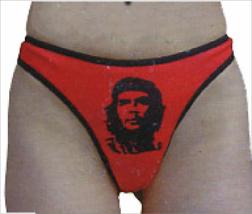
Cómics, remeras, afiches, carteras, ropa interior, gaseosas, muñecos, preservativos y hasta una serie de cigarrillos y habanos exclusivos fueron lanzados con su nombre e imagen.

Las críticas no han tardado en apuntar los fines de lucro que podrían rondar detrás del tardío registro. El socialismo y el consumismo nunca estarían tan hermanados ante tal ambición. Fue por ello que el artista se adelantó al pensamiento, adelantando a la agencia Reuters que su necesidad estriba en frenar el mal uso de la imagen de Guevara. Incluso enfatizó en sus planes de viajar a fin de año a La Habana para hacer entrega de tales derechos de propiedad intelectual a los sucesores de Guevara. “Simplemente la quiero entregar y dar los derechos de la imagen que creé a la familia y que ellos decidan qué quieren hacer” (…) “Causé el problema y ahora busco el modo de rectificarlo“, señaló.

Más información aquí.
Read More

Monday, 3 January 2011

Gilberto Macias (@gmaciasb)

Paraguay – Aprueba marco jurídico para el E-commerce y el E-government.

Oscar Pavia nos informa que el pasado viernes 24 de diciembre de 2010 se publicó en Paraguay la promulgación de la Ley Nº 4.017 “DE VALIDEZ JURÍDICA DE LA FIRMA ELECTRÓNICA, LA FIRMA DIGITAL, LOS MENSAJES DE DATOS Y EL EXPEDIENTE ELECTRÓNICO”, con lo cual finalmente y tras casi diez años de lucha el Paraguay se une al mundo online con el debido respaldo jurídico

Dicha ley otorga validez jurídica a la firma electrónica, digital, mensajes de datos y el expediente electrónico.

El presidente de Paraguay, Fernando Lugo, debe reglamentar el proyecto de ley en un plazo de 90 días contados desde la citada publicación. Seguramente Oscar nos mantendrá oportunamente informados.

Toda la información sobre la tramitación del Proyecto aquí.

El texto integro de la Ley aquí.
Read More

Thursday, 11 November 2010

Natalia Franco Onofre

Brasil, Ecuador, México y Paraguay: Propuesta de Tratado ante el SCCR


El Comité permanente de Derecho de Autor y Derechos Conexos (SCCR por sus siglas en inglés), parte integrante de la Organización Mundial de la Propiedad Intelectual (OMPI), está reunido desde el pasado 8 de noviembre y hasta el día 12 de éste mismo mes, en un nuevo intento por avanzar en las propuestas relacionadas con la mejora en el acceso global a las obras protegidas por Derechos de Autor.


Uno de los temas neurálgicos que se tratarán en ésta reunión es el de las limitaciones y excepciones en favor de las personas con discapacidad visual y otras discapacidades para la lectura de obras protegidas. En relación con éste tema se han presentado cuatro propuestas por parte de Brasil, Ecuador, México y Paraguay (SCCR/18/5), Estados Unidos (SCCR/20/10), el Grupo Africano (SCCR/20/11) y la Unión Europea (SCCR/20/12).


A éste respecto vale la pena resaltar la propuesta formulada por las delegaciones de Brasil, Ecuador, México y Paraguay en el mes de mayo de 2009, dentro del marco de la Decimoctava Sesión del SCCR y que se fundamenta en la propuesta presentada por la Unión Mundial de Ciegos.


Tal y como se desprende de la lectura del artículo 1 del Tratado, dicha propuesta está encaminada a la proporción de “(…) flexibilidades mínimas necesarias en las leyes sobre derecho de autor para garantizar el acceso pleno y en igualdad de condiciones a la comunicación y la información para las personas con discapacidad visual y con otras discapacidades para la lectura de obras protegidas por derecho de autor, centrándose en particular en las medidas necesarias para publicar y distribuir obras en formatos que sean accesibles a las personas que sean ciegas, tengan poca visión, o tengan otras discapacidades para leer textos, con el fin de apoyar su participación plena y efectiva en la sociedad en igualdad de condiciones con los demás, y garantizar la oportunidad de que desarrollen y utilicen su potencial creativo, artístico e intelectual, no sólo en beneficio propio, sino para el enriquecimiento de la sociedad.”


De acuerdo con lo indicado por las delegaciones proponentes, el mencionado Tratado podría facilitar el intercambio de obras en formatos accesibles entre las organizaciones al servicio de las personas con discapacidad visual, finalidad que se encuentra íntimamente vinculada con los principios de otros Tratados y Convenios Internacionales como la Declaración Universal de Derechos Humanos de las Naciones Unidas y la Convención de las Naciones Unidas sobre los derechos de las personas con discapacidad.

En la última sesión del SCCR, celebrada el pasado mes de junio, las delegaciones de de Brasil, Ecuador, México y Paraguay formularon una propuesta de calendario para la adopción del Tratado, la cual incluye un plan para los debates y las negociaciones y que tiene como objetivo la adopción del mismo en la primera mitad del año 2012. De conformidad con las conclusiones de ésta sesión, una vez examinada la mencionada propuesta de calendario, el SCCR decidió encaminar sus esfuerzos hacia el establecimiento de un instrumento jurídico internacional en el que se tengan en cuenta las cuatro propuestas presentadas y arriba referenciadas. (Para más información ver SCCR/20/13)

Habrá que estar atentos a las conclusiones que se deriven de la reunión que está teniendo lugar por éstos días y que podría ser el inicio de una nueva política de limitaciones y excepciones al Derecho de Autor que beneficiaría a las personas con discapacidad visual y demás discapacidades que impiden el acceso a los textos impresos comunes.

Read More