Welcome to our blog for Intellectual Property Law and Practice in Latin America!
¡Bienvenidos a nuestro blog de Derecho y Práctica de la Propiedad Intelectual en Latinoamérica!
Bem-vindo ao nosso blog sobre Direito e Prática de Propriedade Intelectual na América Latina!
Showing posts with label collective marks. Show all posts

Friday, 29 July 2022

Patricia Covarrubia

Mexico: cultural (mis) appropriation

    No comments:
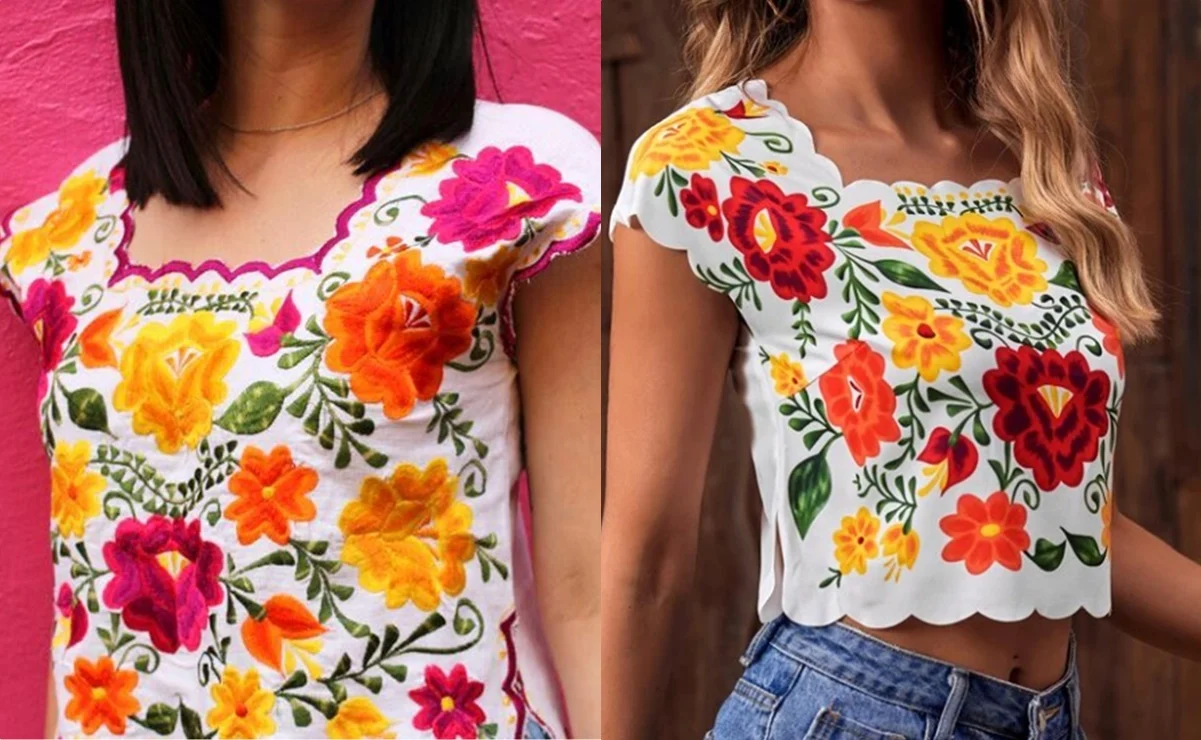
Last week, the Mexican Secretary of Culture sent a letter to the company SHEIN asking to clarify the launch of the piece “Flower trim top with floral print” that is identical to a garment designed by the handicraft brand ‘ YucaChulas’.

The statement reads ‘” cultural elements whose origin is fully documented’, which generate economic rewards in the communities that sell them. The blouse, short huipil, was created in the Mayan communities of Yucatan, Campeche and Quintana Roo, and its design would not be possible without knowledge “transmitted from generation to generation, product of the collective creativity of the Mayan people.”’ YucaChulas also went to social media (here) to express their dismay against SHEIN due to the lack of recognition of the work made by local artisans and how plagiarism diminish and devalued their culture. Since then, SHEIN has removed the garment and noted in a statement that it was not their intention ‘to infringe anyone’s valid intellectual property and it is not our business model to do so.’

Photo: El Universal - YucaChulas left; SHEIN to the right


As you know, the protection of cultural expression through intellectual property is a heated debate. And now, WIPO has advanced in this topic – see early publication here. In the meantime, some countries, especially in Latin America, have some kind of legislation that regulates the use of traditional knowledge, but yet there is not clear procedure or enforcement, it seems like just ‘good practice’. However, one must say that the Panama Law No. 20 on the Special Intellectual Property Regime with Respect to the Collective Rights of Indigenous Peoples to the Protection and Defence of their Cultural Identity and Traditional Knowledge, seems a solid one. Others, like Colombia, continues to use Geographical Indications protecting cultural expressions and traditional knowledge, although this protects the product linked to the origin, rather than the product per se. The same strategy is used in Peru, where you will notice several ‘collective marks’. Yet, IP is territorial and these legal tools, used in Panama, Colombia and Peru as examples, only will stop the ‘plagiarised’ product to be sold in their countries, but can continue to sell it in other jurisdictions. [sad]

Read the news at El Universal MX
Read More

Wednesday, 15 June 2022

Patricia Covarrubia

Peru: QR codes for Collective Marks and enhancing Micro Enterprises

    No comments:
As part of the project run by the Peruvian IPO (INDECOPI), that is ‘Collective Marks Brand Promotion’, the office continues to advertise that by registering a collective mark, INDECOPI designs and produce their QR code for free. 

Such QR code will allow customers to learn about the association or cooperative that owns the collective mark and of course to learn about the product offered e.g., the product’s characteristics, its history, membership (who they are), business contact details, in what market the products are traded, etc. 

Micro enterprises 
In general, as any other IPO office, the INDECOPI provides a good platform aiming to favour ‘economic reactivation of entrepreneurs, businessmen and micro enterprises in the country’. That said, this month, it prepared an event where 222 registrations of collective marks were handed in. It is therefore noticeable that INDECOPI continues to provide a helping hand to micro enterprises which are abundant in the country, especially in the artisanal sector and other rural productions. [micro enterprises have at mots 10 employees. As a curious note, small and medium enterprises represent 99% of all business in the European Union , yet in 2021 micro-enterprises have a turnover of Euro2 million – see the European Commission report here). In Peru, there is an exemption from the payment of the fee for processing the collective mark applications which was in force until September 2019 -- such payment was definitively eliminated in December 2020. 

 INDECOPI reports that up to April 2022, there are 5761 collective marks registered noting that many of these association and cooperatives are formed by women. 

More info click here [in
Spanish]
Read More

Monday, 18 October 2021

Patricia Covarrubia

Collective Marks - a follow up

    No comments:
From Argentina our friend (member of the IPTango community) Claudio Iglesias Darriba writes:

In Argentina, since 2008, the Collective Trademark Act (Law 26.355) provides that the registration of collective trademarks is free of charge before the Argentinian Instituto Nacional de la Propiedad Intellectual INPI (art. 14). In addition, it provides that oppositions against these trademarks pay double the tariff provided for common commercial trademarks (art. 10).

Aside, the Act contains an advanced provision for its time: it provides for the possibility of filling a collective mark through the multi-class system. This is because it was not until the 29th March 2019, that the Argentinian Government issued Decree No. 242/19 regulating provisions of the amended Trademark Law opened the possibly to file “multi-class” trademark applications in Argentina.  

In accordance to the Act, collective marks are defined as those signs that distinguish products and/or services made or provided by associative forms aimed at the development of the social economy. (art. 1) In addition, the Law’s Regulatory Decree (Decree 1384/2008), provides that collective marks are applied to indications of cultural, ethnic, historical, anthropological origin and any other that serves for the better differentiation of products and services. (art. 1) 

A friendly hand
by Jesús Dehesa 
The Collective Trademark Act establishes that the Ministry of Social Development must provide free and specialized assistance during the registration procedures for collective trademarks (art. 15). Besides,  according to the Law, the ministry together with the National Institute of Industrial Technology, and the National Institute of Agricultural Technology, shall facilitate access to quality programs, training and technical assistance for holders and users of collective trademarks, which ensure better processes and products, and better socio labour conditions (art 16). 

The numbers - applications 
These figures developed strongly since 2009, reaching more than 350, both urban and rural, until 2016, when a change in government administration led to a decrease in its use as an instrument of social promotion. Yet INPI confirmed that there are 718 collective marks and the last one recorded was in 2018. Currently, they are expected to resume their boom with the arrival of the new government authorities. 

Collective Marks - a tool
Every year, Las Huellas del Vino, a well-known collective trademark from the city of Lavalle (in the Province of Mendoza) organises an international event attended by dozens of homemade wine makers and hundreds of people (more info here, and this 'From Mendoza to the world: Lavalle exports its know how about homemade wine' here

Thanks Claudio for this insight . IPTango members, is this something that is  happening in your jurisdiction? I remember Ecuador also run a project like this for national geographical indications (GI)- any one else out there? 

Read More

Tuesday, 12 October 2021

Patricia Covarrubia

Peru on Collective Marks: aiming to create a link among communities

    No comments:
Searching on the Peruvian Instituto Nacional de Defensa de la Competencia y de la Propiedad Intellectual (Indecopi)

webpage, I noticed that one of the most popular events and campaigns have been on ‘collective marks’. I was curious indeed, and perhaps to learn more on the trend I clicked on the news – to my surprise I became overwhelm by the great job that the IP office is doing. As a starting point, they have friendly videos covering what a collective mark is, and how they can be an instrument of economic value but crucial to my later discussion, associations. 

Then, it is good to see that since December 2020, Indecopi eliminated the fees for the registration of collective marks. A report published by Indecopi shows how the registration of this type of marks has blossomed. For instance in the 90s and until 2017 there were 236 marks, while during 2017 and 2019 there were 4,442 registrations. The report also notes how women are leading on this type of projects especially in the artisanal sector. [here and here] A remark that I could not miss was to see collective marks for traditional handicrafts and thus, promoting cultural identity and the diversity of national flora and fauna. 

QR Code

I also note with content the use of QR for the collective marks registered. Such QR Code allows “consumers to quickly obtain information related to the characteristics of the product, its history, the association that markets them, its members, the commercial contact information, in which market the products are traded, etc.” Indecopi permanently updates such information. 

Associations – what is the fuzz, if any? 

Collective marks are used by a collective group to distinguish a good or service (a product) from others that do not form part of such collective group. The pre-phase recognition or granting of such marks, invites the members to group the producers. Usually, as in the case of the collective marks recently registered, come from groups and communities where there are fewer resources. Therefore, the establishment of an association of producers is one of the crucial steps taking by the group and or communities. While this may sound easy, the first challenge is how to motivate the community to join a ‘group’. In addition, to build and follow membership rules. At the end, the goal is to have a harmonious group. How to find such balance? A recommendation would be by producing codes of conduct and practices early on the conversation, that is the pre-phase, but also that the guidelines should be feasible so can be used in the post recognition-phase, that is, after the collective mark is granted. Aside from the association been built to organize and prepare a collective mark, the idea goes far from this. Associations help a group to be and feel part of a community – creating a sense of belonging, and to work on the same aim, that of protection, as in the case of traditional knowledge, preserving cultural heritage.
Read More

Monday, 17 May 2021

IPTango

Perú: INDECOPI elimina de forma definitiva el pago de tasa por registro de marca colectiva


En el marco de los festejos del Día Mundial de la Propiedad Intelectual, el Instituto Nacional de Defensa de la Competencia y de la Protección de la Propiedad Intelectual (INDECOPI) eliminó de forma definitiva el pago de tasa por registro de marca colectiva.

La eliminación definitiva del pago de tasa tiene como finalidad fomentar “la reactivación de los emprendedores y productores para combatir los efectos económicos adversos causados por la [pandemia de] COVID-19”.

La eliminación del pago de tasa por registro de marca colectiva se había decretado de forma temporal (Decretos Supremos No. 086-2017-PCM y No. 092-2018-PCM), para apoyar a los emprendedores y productores afectados por el fenómeno del Niño Costero, extendiéndose a todo el país en 2019.

En este contexto, INDECOPI señaló que entre 2017 y 2019, dicha eliminación temporal generó un ahorro, a emprendedores y productores, de aproximadamente S/ 8 799 467 (ocho millones setecientos noventa y nueve mil cuatrocientos sesenta y siete soles)". Dicho ahorro fue calculado con base en las 4 870 "solicitudes de marcas colectivas tramitadas por empresarios y productores nacionales durante dicho período”. El Instituto destacó que “766 agrupaciones de productores, artesanos y Mypes de todo el país se beneficiaron [de la eliminación del pago de la tasa]. El 54% (413) pertenece al ámbito rural; y, 77, son lideradas exclusivamente por mujeres”.

De igual manera, INDECOPI señaló que el plazo para otorgar marcas colectivas se redujo a 42 días, “siendo el plazo legal de 90 días hábiles”.

Aunado a la eliminación de tasa, INDECOPI publicó la Guía ‘Yo protejo mi marca colectiva’, la cual contiene información sobre qué son las marcas colectivas, cómo solicitar su registro, así como los costos y beneficios de registrarlas.

Asimismo, el Instituto “ha puesto a disposición de los emprendedores y productores organizados un programa de beneficios, sin costo alguno, relacionados a: capacitaciones sobre el uso, registro y gestión de marcas; asesoría técnica especializada en la identificación y clasificación de productos y servicios; búsqueda de antecedentes fonéticos o figurativos; apoyo técnico en el llenado de solicitudes de registro de marcas; generación y entrega de códigos QR conjuntamente al registro de marcas colectivas para la promoción y posicionamiento comercial de los productos y servicios, entre otros”.

Consulta aquí la página web de INDECOPI dedicada a marcas colectivas.

Revisa aquí el mapa interactivo de marcas colectivas en Perú.

Lee aquí la Guía ‘Yo protejo mi marca colectiva’, publicada por INDECOPI.

Fuente: Comunicado de prensa publicado por INDECOPI.

Crédito: Imagen de mailanmaik en Pixabay.
Read More

Sunday, 30 August 2020

Verónica Rodríguez Arguijo

ASIPI launches the interactive map of AOs, GIs, collective and certification marks


The Inter-American Association of Intellectual Property (ASIPI) launched the interactive map of appellations of origin (AOs), geographical indications (GIs), collective and certification marks of the Americas.

The Committee of Geographical Indications of ASIPI carried out the project which aims “to provide a tool that, in addition to being a source of consultation, would allow interaction for feedback and permanent updating”. 

The interactive map allows to sort per country, and it is available in Spanish and English. A brief description of the GIs, AOs or marks is displayed when they are selected, and the relevant regions are highlighted on the map. 

So far, the AOs, GIs, collective and certification marks* of the following countries are available on the map: 
  • Argentina 
  • Belize* 
  • Bolivia 
  • Brazil 
  • Chile* 
  • Colombia, 
  • Costa Rica* 
  • Cuba 
  • Dominican Republic 
  • Ecuador 
  • El Salvador 
  • Guatemala 
  • Jamaica 
  • Mexico 
  • Nicaragua 
  • Panama 
  • Peru 
  • Puerto Rico 
  • The United States* 
  • Venezuela 
ASIPI encourages to submit here and here any updates or additional information concerning the map. 

Image of Arek Socha on Pixabay.
Read More