Welcome to our blog for Intellectual Property Law and Practice in Latin America!
¡Bienvenidos a nuestro blog de Derecho y Práctica de la Propiedad Intelectual en Latinoamérica!
Bem-vindo ao nosso blog sobre Direito e Prática de Propriedade Intelectual na América Latina!

Monday, 19 September 2011

Patricia Covarrubia

Your image right? Oh darling, look at your contract of employment first

    No comments:
Once upon a time a Brazilian publisher (Panini Brazil Ltda) edited and published the photo sticker album ‘Campeonato Brasileiro 91’. Fluminense former player Carlos Alberto Luciano, filed an action for compensation for material and moral damages, against the editor for publishing without permission, his photo as a sticker in the aforementioned album.

The situation is that at the time the album was published, Luciano was playing for the Rio de Janeiro club. Panini Brazil Ltda argued that it had signed a contract with the club which involved the right to use the image of its players. To this effect, Panini noted that by signing the contract it is Fluminense who is held liable for any damages resulting from the dissemination of these images. Moreover, Panini added that the athlete had acted in bad faith by filing the action, mentioning that 17 years has gone by between the publication of the album and the filing of the suit.

At first instance, the court of the 14th Civil Court of Belo Horizonte condemned the publisher to pay R$ 12,000 in moral damages and ordered the club to pay compensation. The publisher appealed and so did Fluminense. In the second instance the Court of Justice of Minas Gerais acknowledged that this case was no for a common court but for a labour court and thus, annulled the first instance decision and decided to refer the case to the Labour Court, which raised the conflict of jurisdiction in the Supreme Court.

Superior Court of Justice (STJ).
The rapporteur of the case, Minister Nancy Andrighi, held that the property right to use the image of the player depends on the employment contract. It concludes that the action for compensation for material and moral damages, filed by former player against Panini Brazil Ltda is the competence of a labour Court.

The news refers to case No CC 113220.
Read More

Sunday, 18 September 2011

Rodrigo Ramirez Herrera @ramahr

Tendencia al alza de las patentes de invención en Panamá

El Ministerio de Comercio e Industrias de Panamá (MICI) informó que el número de patentes de invención llegó a 145 durante el segundo cuatrimestre del año 2011, aumentando en un 19.8% con relación al cuatrimestre del mismo año.  Los datos fueron expuestos durante un seminario internacional sobre el tema que se llevó a cabo en la capital panameña del 13 al 15 de septiembre.  

El ministro de Comercio e Industrias de Panamá, Ricardo Quijano, resaltó el interés de la cartera para proteger toda la invención que sea nueva y tenga aplicación industrial, al tiempo que consideró importante la capacitación que sobre la materia imparten los funcionarios. La viceministra de Industrias y Comercio, Yasmina Pimentel, dijo por su parte en el encuentro sobre el Tratado de Cooperación en Materia de Patentes (PCT), que "la propiedad intelectual tiene un papel predominante en la integración económica internacional". Agregó que, de esta forma, es posible proteger la innovación y fortalecer la plataforma tecnológica del país.

El seminario contó con el apoyo de  Universidad Tecnológica de Panamá y la Asociación Panameña de Derecho de la Propiedad Intelectual (Apadepi), y en su capítulo PCT con el respaldo de la Organización Mundial de la Propiedad Intelectual (OMPI) y de la Oficina Española de Patentes y Marcas.

Read More
Aurelio Lopez-Tarruella Martinez

Guest Post: Oscar Montezuma on Innovation, Technology Transfer and IP in Peru

Oscar Montezuma Panez, Cyberlaw and Intellectual Property Attorney in Peru and one of the administrators of Blawyer (in Spanish), has sent to IP Tango a post that might be of interest to our audience:

INNOVATION, TECHNOLOGY AND INTELLECTUAL PROPERTY (*)


Renowned journalist Andres Oppenheimer, affirms in his latest book, "Basta de historias", that in certain countries, whose economies depend on exportation of primary products (such as Peru), developed sustained and long term educational policies that were reflected in research, innovation and technology accomplishments, achieving success and prosperity. Applying these experiences to Latin America, the author correctly concludes, the region has a pending task.

The more we invest in education, research and technological development, the more we will be better able to face the global challenges of the knowledge society, states the author. In Peru, we are very proud of openness, economic growth and trade agreements which will bring benefits to our exportation of primary products, but how much are we are doing to develop and export value added products and services with local knowledge and creativity? The answer is not encouraging.
Peruvian economist, Santiago Roca, notes that in the case of Peru, while our trade balance is in surplus over the last decade, knowledge wise the fate run opposite. Peru produces less and less knowledge and continues towards the bottom of international education quality rankings.

A country that invests in education, research and technology and turns it into a competitive advantage must have an adequate legal framework to protect intellectual property. Peru has progressively developed cutting edge legislation, raising its intellectual property legal safeguards and protections to internationally accepted standards. However, with the exception of trademark law, the use of the system of copyrights and patents is not relevant to local creators.

On the other hand, Peru lacks public policies aimed to develop creative and cultural industries (copyright) and to promote research on innovation and technology (patents). Our country remains to be an active importer of creativity and technology and a passive exporter of it. Developing public policies to change this scenario seems to be the appropriate path. What are we waiting for?

(*) Previously published on Diario El Comercio from Peru (Friday, July 8th, 2011)

Read More

Friday, 16 September 2011

Rodrigo Ramirez Herrera @ramahr

Obama ha firmado la Ley de Reforma del sistema de Patentes de EE.UU.

Continuando la información del post Far away but close to home de nuestro blog, ha quedado firmada la ley de reforma del sistema de patentes de Estados Unidos, la más profunda desde 1952. La Leahy-Smith America Invents Act fue aprobada en el Senado por 89 votos contra 9 el 8 de septiembre y hoy tuvo lugar su promulgación.El lugar escogido fue la Thomas Jefferson High School for Science and Technology in Alexandria, Virginia. 

Una de las principales reformas es la nueva versión del § 102 (35 USC § 102) que establece que una persona tendrá derecho a una patente a menos que la invención reivindicada se haya hecho pública antes de la fecha de presentación efectiva de la solicitud respectiva, vale decir, establece el sistema conocido como "First-Inventor- To - File (FITF) system" que reemplaza al "First- To-Invent (FTI) system" quedando así alineado con la mayoría de los países del mundo, respecto de los cuales, en especial solicitantes extranjeros, la reforma generará algunas otras consecuencias.

Las excepciones siguen siendo las revelaciones públicas hechas por el inventor o por otra persona que haya recibido la información del inventor un año o menos antes de la fecha de presentación efectiva de la solicitud de patente (plazo de gracia o divulgación inocua). Por otra parte, la divulgación de las aplicaciones publicadas y las patentes no son estado de la técnica si la materia divulgada vino directamente o indirectamente del inventor. El texto completo de la reforma está disponible en inglés.
Read More
Patricia Covarrubia

Venezuela: a tormenting week

    No comments:
This week we posted two notes from Venezuela: an IP reform is on its way and Empresas Polar transferred its mark to a Canadian company (also the post mentioned some other Venezuelan trade marks and brands (the majority well-known) that have been transferred to other companies abroad). To this info I would like to add that Venezuela has taken steps to pull out from the International Centre for the Settlements of Investment Disputes (ICSID) which, as its name stands for, is a global for dispute resolution. While this latter news appears not to have relation with IP I regret to disagree. The foreseeable future seems to be frightening for IP authors and owners. Let us consider some matters that have been happening in this country, lately: 1.- In 2006 Venezuela withdrew from the Andean Community block which did have an impact on IP. For instance, the government declared that certain pharmaceuticals patents granted under the Andean Community (CAN) Decision 311, 313, and 344 were ‘illegal’ because the Industrial Property Act of 1956 ( in force) prohibits this type of patents. 2.-Venezuelan Government has expropriated 988 companies (401 this year), nationalising even international companies. Additionally, we need to have a look at the information provided by the Venezuela Central Bank which reports that the government owes more than $40 billion for properties nationalised by it (ConocoPhillips US $30billion; ExxonMobil Corp US $7billion; Crystalles International Corp Canada $3.8 billion; Cemex Mexico $1billion; Holcim Switzerland $650 million, upon others). 3.- Venezuela not only has expropriated physical properties but also IPRs such as the case of Venezuelan coffee roasting company ‘Fama de America’. The government expropriated its trade mark. 4.- Last month academics and Scientifics called for the annulment of the Law of Science and Technology claiming that if the law is implemented it could abolish the existence of any IP protection which “would hinder further innovation process that the law says it wants to promote.” 5.- This year Venezuela was placed on the priority watch list released by the Office of the United States Trade Representative (special 301 Report) – the study focus on the adequacy and effectiveness of U.S. trading partners’ protection of intellectual property rights(IPRs). I am sure there has been much more news regarding these matters but I bring today these ones. Without bias, I can see and say that national and foreign companies are pulling out of this country which means investments, inventions, technologies are leaving. For example, the fact that Venezuela is withdrawing from the ICSID gives a warning to foreign investments especially investors and holders of Venezuelan debt bonds amid fears of having to resolve disputes in unreliable domestic courts. For these reasons I await the reform that the government is so promoting but I have to be honest and say that I am not holding my breath on this one (it is I believe quite predictable – this means no good news for IP authors and owners).
Read More

Thursday, 15 September 2011

Rodrigo Ramirez Herrera @ramahr

Lanzamiento de política pública de Indicaciones de Procedencia en Chile


En pleno mes de fiestas patrias, el ministro de Economía de Chile, Pablo Longueira, dio hoy partida a un nuevo plan del Instituto Nacional de Propiedad Industrial, INAPI, que busca inyectar mayor competitividad a los productos típicos de diversas zonas de Chile invitando a los productores a aprovechar las normas de propiedad industrial para proteger la reputación y calidad de sus productos a través de las distintas especies de indicaciones de procedencia: indicaciones geográficas, denominaciones de origen, marcas colectivas y marcas de certificación.

El anuncio lo realizó el ministro Longueira en la tradicional Chichería Duran de Curacaví, donde un grupo de 30 pequeños y medianos empresarios recibieron su certificación de asociación gremial de agroturismo. El secretario de Estado invitó a éstos productores a sumarse al programa de INAPI y buscar la mejor opción de protección mediante estos derechos industriales para la Chicha y los dulces de la zona.

Entre los productos que podrían obtener signos distintivos de procedencia están: chalecos de la Ligua, dulces y chicha de Curacaví, sandías de Paine y las aceitunas de Azapa, entre muchos otros.

Si bien las denominaciones de origen han sido usadas en la industria vitivinícola, no han tenido un desarrollo equivalente en otras áreas productivas. Una de las pocas excepciones es el Limón de Pica, que es el único producto nacional protegido con indicación geográfica.

Con este objetivo, el Ministerio de Economía ha convocado a una mesa de trabajo que será coordinada por INAPI y en la que participarán INDAP, ODEPA, el SAG y el Consejo de la Cultura. Dicha instancia tendrá la misión de elaborar en el menor tiempo posible, junto a otros organismos públicos y privados que se determinen, un mapa en el que se identifiquen productos nacionales susceptibles de protección y promoción.

El Director Nacional del INAPI, Maximiliano Santa Cruz, explicó se trabajará en diversas líneas en conjunto con los otros organismos convocados: “Se entregará información y se asesorará eventualmente la presentación de varias indicaciones geográficas a lo largo del país. Naturalmente que INAPI no puede prejuzgar si determinados productos se convertirán en definitiva en indicación geográfica o denominación de origen. Esto se sabrá después de un análisis hecho por el Instituto”, precisó.

En una segunda etapa, se buscará prestar asesoría a las comunidades interesadas para la preparación de la documentación necesaria para la presentación de la solicitud para el registro de marca u otra modalidad de protección, para lo cual INAPI pondrá a disposición de los interesados guías y un marco referencial para la protección de marcas y nombres.

Un primer objetivo del plan es que al menos cinco comunidades o asociaciones de productores hayan iniciado la tramitación de sus solicitudes para la protección de sus productos ante el INAPI para el próximo 18 de septiembre del 2012.

Fuente: Comunicaciones Inapi (Diego Ponce G.)
Read More
Patricia Covarrubia

Previous material control on the internet would breach confidentiality

    No comments:
The Brazilian Third Chamber of the Superior Court of Justice (STJ) has held that Services Providers are not required to apply any earlier control on material posted on the Internet, however they need to keep track and remove offensive content. This decision denied a claim for compensation against Google Brazil Internet Ltda and its site Orkut (social networking site) .

Background of the case
An Orkut’s user claimed that he was offended by the content published on this site. The first Instance court determined the removal of the offensive material (a photo album and its content) and payment of R$ 8,300 for moral damages. Google appealed and the Court dismissed it believing that the site would have developed tools to restrain abuses and to identify the user responsible for the offenses.

The case reached the STJ: Google claimed that the Court sentence was extra petita (judge holding something other than what was the requested action), since at no time the claimant asked for information about the user responsible for the said offences. It also argued that not having participated in the creation of Orkut’s offensive material it could not be held liable and be required to indemnify the victim -- under articles 182 and 927 of the Civil Code, the perpetrator of the offense is the only one required to compensate.

The rapporteur of the process, minister Nancy Andrighi, held that Google's liability should be restricted to the nature of the activity developed by it. To this effect, the services offered by the company via Orkut include confidentiality, security and inviolability of customers’ data. Therefore, "regarding the supervision of the information posted by users, it is not an inherent activity of the service, so it cannot be considered to be defective, in accordance with Article 14 of the CDC". Interestingly, the minister argued that if previous control (in this case by Google) of material is required, then it would be a breach of confidentiality of communications prohibited by Article 5, section XII of the Federal Constitution. Moreover, she claimed that early verification of the content would eliminate one of the biggest attractions of the Internet, which is the transmission of data in real time.

However, the minister argued that there is still responsibility for traffic information saying that "there is however the duty, once aware of the existence of a message which is offensive, to withdraw it immediately from the air". To this effect she noted that the company took the offensive material from the air as soon it was informed of the situation. In addition, Google maintains a channel for people, or non users who have had their identities stolen on Orkut, to request the removal of the account and report other abuses. Concluding, the minister removed Google’s obligation to indemnify.

The case is Process No REsp 1186616
Read More
Rodrigo Ramirez Herrera @ramahr

SAPI toma posición sobre transferencias de marcas venezolanas a empresas extranjeras

Mediante un comunicado de prensa oficial, el Director del Servicio Autónomo de la Propiedad Intelectual (Sapi) de Venezuela, José Villalba resaltó que marcas venezolanas clásicas están siendo transferidas a inversores extranjeros con la finalidad, "de obtener dólares mediante la Comisión de Administración de Divisas (Cadivi)" pues al no ser dueñas de la marca, las compañías venezolanas deben pagar por su utilización, según informó.
 
En el comunicado de prensa reseñó que las Empresas Polar, de alimentos y bebidas, ha vendido desde 2004 casi todas sus marcas a firmas no venezolanas, entre las cuales está Harina P.A.N. que data de 1960 y que hoy pertenece a la compañía canadiense Deutsche Transnational Trustee Corporation (DTTI) que también adquirió la marca Polar de Cervecería Polar. El mismo funcionario informó que el diario El Universal, fundado hace 102 años en Venezuela, también es una marca propiedad de DTTI. Pampero, marca de ron que pertenecía a Industrias Pampero, y Cacique, que era de Licorerías Unidas, pasaron a ser propiedad de R & A Bailey And Co., domiciliada en Irlanda, dueños de la marca Baileys. Entre los ejemplos citados por Villalba también se encuentra la marca de calzado infantil Pocholín, antes propiedad de calzados Doria C.A., que figura actualmente como propiedad de Invercentro, C.A., con sede en Panamá.

El funcionario concluyó en su comunicado que es necesario reformar la normativa sobre esta materia para regular este tipo de prácticas comerciales.

Read More
Rodrigo Ramirez Herrera @ramahr

Entra en vigor TLC entre Mercosur e Israel

El Tratado de Libre Comercio (TLC) entre los cuatro Estados Parte del Mercosur (Argentina, Brasil, Paraguay y Uruguay) y el Estado de Israel, entra en vigencia luego de cuatro años de negociaciones, después que Argentina fuera, en marzo, el quinto integrante del acuerdo en ratificarlo parlamentariamente, como ya habían hecho Brasil, Paraguay, Uruguay e Israel.

Las nuevas reglas para el intercambio de bienes permitirán el ingreso de nuevos productos en ambos mercados, consecuencia de las nuevas ventajas competitivas que trae un tratado de libre comercio.

Las negociaciones del acuerdo habían comenzado en diciembre de 2005 y fueron suscritas dos años después, lo que conformó el primer acuerdo que el bloque de América del Sur suscribió con un país fuera de Latinoamérica. El convenio cubre un calendario de desgravaciones arancelarias progresivas de cuatro fases, a 4, 8 y 10 años.
 
Read More
Rodrigo Ramirez Herrera @ramahr

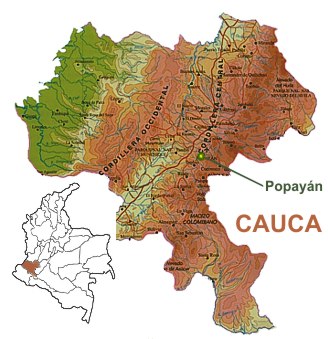
Nueva Denominación de Origen Café de Cauca de Colombia

El 10 de agosto recién pasado la Superintendencia de Industria y Comercio de Colombia (SIC) acogió a solicitud de registro de la Denominación de Origen "Café de Cauca" para la clase 30 del nomenclátor, a nombre de la Federación Nacional de Cafeteros.

El gremio de los caficultores inició el trámite, luego de un proyecto de investigación y caracterización que comenzó en el 2006.

La solicitud fue presentada en octubre de 2009 dentro estrategia de posicionamiento de cafés regionales que comenzó el año pasado (abril y octubre) junto con la solicitud de Denominación de Origen "Café de Nariño". Hoy ambas están concedidas.


Read More