Welcome to our blog for Intellectual Property Law and Practice in Latin America!
¡Bienvenidos a nuestro blog de Derecho y Práctica de la Propiedad Intelectual en Latinoamérica!
Bem-vindo ao nosso blog sobre Direito e Prática de Propriedade Intelectual na América Latina!
Showing posts with label Agriculture. Show all posts

Friday, 30 September 2016

Patricia Covarrubia

A dining table full of goodies: the relevance of Geographical Indications (GI)

    No comments:
You may think that I am gluttonous or better say piggish but I really love food. It is not the fact that I eat a lot (which I do) but I like and enjoy myself every time I eat. Even sitting now having my simple lunch in front of the computer, I am thinking 'this is the best creamy carrot soup ever made' (by my mother).
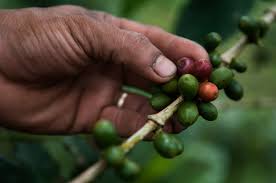
Image result for coffee plantation mosquito bitesThe texture, the different flavours and fragrances that food provide us with, are to be appreciated. Perhaps I learned from a young age to value food... the preparation of the soil, the plantation, the harvest. I remember the no so pleasant mosquitoes when we were harvesting coffee but I also remember so vividly the best fresh coffee one could have.

Many countries claim to have dishes full of tradition and every time I visit a new country I will try national dishes (of course there are some that I have not enjoyed as much).
In this blog we keep reporting on GIs, the procedure, who got a new one, entitlements, infringements, but in any case we always mentione the importance and relevance that it has for the country, for the particular region and for its people. We sometimes acknowledge that a GI is not for everyone and that there is not always gold at the end of the rainbow. Yet, without a doubt if a product got that little certification i.e. GI label, it will turn heads. And it does so because the product that contains that GI label will tell you that it has a special quality and that such a quality is due to the geographical environment, including natural factors such as: climate, soil, minerals, water and the human factor. A GI is a cultural representation, a heritage.

Image result for grupo sanbornsI read therefore with enthusiasm that in Mexico, the ‘Grupo Sanborns’ is offering to the diners of their chain of restaurant, a menu which highlights the traditional Mexican dishes including particularly those that have a Denomination of Origin (DO). The news brought by the Instituto Mexicano de Propeiedad Industrial (IMPI) notes some of the agricultural products that customers will try such as: ‘Tequila, Mezcal, Arroz del Estado de Morelos, Vainilla de Papantla, Mango Ataúlfo del Soconusco Chiapas, Chile Habanero de la Península de Yucatán y Café Veracruz.’

In the same line, we heard from IMPI that they have granted the 15th DO to 'Cacao Grijalva' comprising 3 sub-regions and 11 municipalities. The quality is partly given due to domesticated forest which mirrors the rain-forest and prevents soil erosion. The climate is also accountable for the quality of the cocoa which is claimed to be in production since pre-Hispanic times.

More information here and here. 


Read More

Thursday, 28 January 2016

Patricia Covarrubia

GI: does it help?

    No comments:
Image result for sello de origen chile‘Sello de Origen’ (Label of Origin) is a Chilean program developed by the Ministry of Economy together with INAPI. The aim is to provide resources for those interested in applying for their product to be distinguishing by this label i.e. sello de origen, which may comprise a geographical indication, denomination of origin, collective marks and/or certification mark. The resources are used to develop the technical studies required for the application. The sign seeks to protect and commercially promote the typical products of Chile.

According to INAPI, ‘sello de origen’ aims to protect and promote typical products and it stimulates entrepreneurship and productive development of communities in the country. The program started back in 2012 where each region in Chile submitted a list of potential products that could be enhanced by this sign. The list then was analysed by a technical committee which started to prioritized products that had potential.

Image result for sandias de paineThis year starts by granting the label and geographical indication to ‘Sandías de Paine’ (watermelon from Paine). Paine’s watermelons made an application in late 2014 stating that the watermelons were distinctive from others due to its high sweetness and nutritional quality. Each variety been different from each other because of their size, shape, and harvest time.

Among other Chilean GIs there are: Limón de Pica (lime); Langosta de Juan Fernández (lobster); Atún de Isla de Pascua (tuna); Cangrejo Dorado de Juan Fernández (crab); Dulces de la Ligua (sweet); Maíz Lluteño (corn). A more recent certificate granted through this program was the certification mark ‘Manos de Isla Negra’ for hand woven material – embroidery; each piece been unique and with a processing time between 2 to 6 months.

GIs are launched as a promoting tool for products but we need to make sure that apart for promoting they still protect - protection not in the IP sense because surely GI works as a distinctive sign which refrains others without right from using it. GIs, as in the case in here, and actually the whole 'sello de origen' covers unique typical products. Usually these products are produced by farmers or small communities where the value given to the product is given by uniqueness. If we push that production because the demand is higher are we potentially destroying it? I am reminded of the Chulucana's case in Peru and Tequila in Mexico. Do you know any other cases?
Read More

Tuesday, 21 May 2013

Patricia Covarrubia

Peru: Collective marks for traditional products

    No comments:
Under the theme "Peruvian ingenious: engine of development", the Peruvian Institute of free competence and intellectual property (INDECOPI) granted some collective marks. The said marks were addressed to rural farmers in the cities of: Abancay (for home noodles), Huancavelica (for native potatoes) and Lambayeque (for craft made with native cotton). These products are grown or made in traditional ways. 


The registration of the collective marks was the product of an alliance with AGRORURAL, Ministry of Agriculture, and UN Agency for Industrial Development Unit (UNIDO). INDECOPI informs that through the IP system, it has directly benefited 748 entrepreneurial rural families. It is claimed that the collective marks would help in the development and strengthening of these rural enterprises and moreover, it would bring benefits to the communities involved.

Source  INDECOPI.
Read More

Thursday, 14 February 2013

Patricia Covarrubia

Paraguay: a week of 'modification' for soybeans

    No comments:
Last Monday, 11th February, the Paraguayan’s Agriculture Ministry informed that authorization has been given to Monsanto's Intacta RR2 Pro genetically modified (GM) soybeans. The product is the second generation of its previous product Roundup Ready soybeans (i.e. RR). The GM soybeans apart from being resistant to glyphosate-based herbicides, it also protects against caterpillars.

The news comes after last week events where a group of Paraguayan farmers introduced an injunctive relief to stop Monsanto from charging royalties for use of its RR soybeans. The argument is based on the fact that the patent of this product expired back in 2010 [we may recall a similar case regarding the expiration date; back in 2011 a Brazilian Specialized Federal Regional Court upheld the action for rescission brought by INPI to overturn the extension of two patents owned by Monsanto, posted here].
Reuters reports that the Paraguayan farmers were encouraged by “a similar case in neighboring Brazil where a state court ordered Monsanto to stop charging for use of the seed technology.” In the same line the Paraguayan Soy Producers' Association proposed to cease payment but “without any prejudice to other negotiations on different strains" i.e. RR2 While Monsanto spokesman in Paraguay declined to comment on the farmers' legal action, the company defended an agreement that was signed with farming associations in 2004 and due to expire in 2014. The contract establishes “payments for the use of its seed technology” and it is argued “that its royalty rights remain in place for as long as there are valid patents on the technology anywhere in the world.”

In Brazil the deal finished by Monsanto releasing the farmers from any payment (this and next season) of  royalties regarding the first generation RR soybeans in exchange for the farmers to wave "all potential legal claims for payments previously made for this first-generation technology". Also Monsanto said that "the farmers will secure licenses to purchase new soybean technology" i.e. Intacta RR2 Pro.
Read More

Friday, 9 March 2012

Patricia Covarrubia

Rural Areas are helped through collective marks

    No comments:
Promoting competitiveness of products in rural areas is one of the targets in Peru this year. To do so, INDECOPI together with AGRORURAL (part of the Peruvian Ministry of Agriculture) have established a partnership with the United Nations Industrial Development Organization (UNIDO) to promote the use and registration of collective marks in different regions.

Collective marks, are used by a group of people (or companies) to distinguish their products from others undertakings – only to be used by members of that group/organization. Usually the group encourages standards and establishes a common strategy. It also may help “to promote the attraction of the area where producers are located.” Internationally, the World Trade Organisation Agreement on Trade-Related Aspects of Intellectual Property Rights (TRIPs) requires the protection of collective marks - Peru is a member.


The trio, that is INDECOPI, AgroRural and UNIDO, discussed previous proposals from producers and selected some of them. The selected ones will now receive assistance in collective marks. The nominated were: ‘tallarin de casa’ Abanquino (Abancay - Apurimac Region), ‘native potatoes’ from the province of Acobamba (Huancavelica Region), 'native cotton' and 'honey of Lambayeque' (Lambayeque Region) and 'avocado Moro' and 'avocado Matacoto' (Ancash Region).

The program “not only seeks to promote the use and registration of collective marks, but to enable producers to have sufficient tools to help them improve their competitiveness and to develop successfully in the market.”

Source INDECOPI.
Read More

Wednesday, 22 February 2012

Patricia Covarrubia

Brazil on how to sell someone something...

    2 comments:
The Brazilian Intituto Nacional da Propiedad Industrial (INPI) has announced the approval of three Geographical Indications (GI) in the form of Designation of Origin (DO). On June 23, 2010 INPI received these three GIs for stones under the names: ‘Pedra Carijó-Paduana’; ‘Pedra Madeira-Paduana’; and, ‘Pedra Cinza-Paduana’. The said stones are decorative and have a specific characteristic common on the region - Northwest Fluminense, State of Rio de Janeiro. Now the administrative procedure is for the applicants to pay the fees (during the next 60 days) and thus a certificate will follow, formalizing and ending the whole procedure.

INPI informs that from the 60’s the Northwest region of Rio de Janeiro has traditionally be in the business of decorative stones, which started in the 50’s by the extraction and mining of mylonite-gneisses. Yet, the stones were marketed in their raw state and unpolished. It was not until the 90’s when they started to produce ‘lajinhas’ which are the result of using a sawmill and thus, getting smalls and polished stones.

Last month INPI granted GI protection to a different stone: ‘opalas preciosas’ (opal gem) which is a semi-precious stone used in jewellery. Today we are talking about other types of stone, used for coating landscape projects, driveways and decorative pavement.

On the same topic, last week this blog also covered GIs in Colombia and praised that this country has the highest number of DO declared in the artisanal sector (in Latin America) and this matter got me to think which other Latin America country has a vast range of GIs – I am guessing, Brazil? They have the usual agricultural raw and processed agricultural products such as: wines, beef, coffee, rice, biscuits, prawns, mangoes, grapes, melons (TBC), cheese, sweets; but they also have: pewter craft, grass craft, semi precious stones, clay pots, shoes (TBC), finished leather, and now decorative stones. Indeed, I believe that the Brazilian market (and indeed INPI) is working out how to identify and market itself with ‘something’ for someone. However, can we assert that GI should better protect foxes than hedgehogs? [ancient Greek poet Archilochus: ‘The fox knows many things, but the hedgehog knows one big thing’].
Read More

Wednesday, 31 March 2010

Patricia Covarrubia

Brazil and the UK – a new team?

    No comments:
I would love to think that Brazil and the UK can do a good mixture of techniques in a football pitch but I need to spoil my mind and think of IP! I am afraid I cannot wait for the World Cup to start.


Back to the news. Today, a partnership is solidified between Brazil and the UK with the inauguration of Labex Europe unit (here in England), a virtual lab of the Brazilian Agricultural Research Corporation (Embrapa) . Brazilian and British scientists are building a new team focusing on technology and innovation to meet the challenges of sustainable agriculture.

For the entire information here.

I was looking for a picture to download and I found out this: ‘There is a saying in football that “the English invented it, the Brazilians perfected it” ; will it be the same for this new team?
Read More