Welcome to our blog for Intellectual Property Law and Practice in Latin America!
¡Bienvenidos a nuestro blog de Derecho y Práctica de la Propiedad Intelectual en Latinoamérica!
Bem-vindo ao nosso blog sobre Direito e Prática de Propriedade Intelectual na América Latina!
Showing posts with label Peru. Show all posts

Tuesday, 2 August 2022

Patricia Covarrubia

Peru: the FIVE instruments of accession [I got it wrong]

    No comments:

On July the 18th we published in this blog that the executive president of the Peruvian Intellectual Property Office (Indecopi) submitted, during the Sixty-Third series of meeting of the Assemblies of the member states, five instruments of accession. 


At the time, the news was that one of them was the Geneva Act of the Lisbon Agreement (re. denominations of origin and geographical indications), and I was quick to ‘guess’ that one could have been the Madrid System. At the end I reported on others that were still pending. Well…I got it wrong, my wonderful and desirable guess was not so brilliant after all. Peru is putting this in the ‘long overdue’ to do list, and I said overdue because Colombia, a counterpart in the EU FTA together with Peru, started to work towards this back in 2012. 


The other guesses were: Locarno Agreement (re classification for industrial design); Strasbourg Agreement (re classification for patent); Nice Agreement (re classification for marks); and the Vienna Agreement (re classification for marks that consist or have a figurative element). All of them consist of international classification, which will appear in official documents and publications relating to the registration and renewals of the designs, patents, and marks respectively, the NUMBERS of the categories, DIVISIONS and SECTIONS of the Classification to which the design, patent and marks belong to. 


Photo: Proarándanos
During the encounter, Peru noted its effort to implement WIPO GREEN. This is an initiative that promotes ‘innovation and diffusion of green technologies’ (for more info, see here). The goal is to ‘connect providers and seekers of environmentally friendly technologies’ via an online platform where they can exchange information. Peru noted that they are focusing on the agro-industrial sector specifically prioritizing coffee, and blueberries. Peru has TWO denominations of origin for its coffee: Café Villa Rica and Café Machu Picchu – Huadquiña. While there is none for blueberries, this fruit has put Peru in the top list of exporters, for instance, this year has exported more than 5,000 tons of blueberries (Proarándanos). 


To read the news click here.

Read More

Monday, 18 July 2022

Patricia Covarrubia

Peru: WIPO Geneva Act

    No comments:

The Sixty-Third series of meeting of the Assemblies of the member states is taken place at WIPO headquarters (Geneva, 14th-22nd July). While the event is taken place in a hybrid format, the Peruvian delegates are present. Specifically, the executive president of the Peruvian Intellectual Property Office (Indecopi), noted face-to-face to the counterparts, ‘the initiatives and advances of Peru in the field of intellectual property’. [more info here]

The Geneva Walk - walking towards WIPO, June 2016

In particular, it was disclosed that Peru will deposit its instruments of accession to five treaties, including the Geneva Act of the Lisbon Agreement, which shows ‘commitment as a country’. There is not other indication of what other Treaties or Agreements those would be, but if we are to guess, one maybe the Madrid System, which now covers 128 countries.  From Latin America:

  • Brazil (Madrid Protocol, October 2019; 
  • Chile (Madrid Protocol, 2022); 
  • Colombia (Madrid Protocol, August, 2012); 
  • Cuba (Madrid Agreement, December, 1989; Madrid Protocol, December 1995); 
  • Mexico (Madrid Protocol, (Madrid Protocol, February 2013). 
This is long overdue, Colombia, the first Latin America country to become a party, did it back in 2012 as a compromise - noted in the FTA with the EU (published in this blog here), which was signed same time (June 2012)  by both, Peru and Colombia (later on signed by Ecuador).


Regarding Geographical Indications (GI), the three countries, that is Colombia, Ecuador and Peru, amended and or adopted GI legislation in a manner similar to the EU. The EU deposited its instrument of accession to the Geneva Act of the Lisbon Agreement on 26 November 2019, and in force since February 2020.


Any other guess? Peru is not yet pat of the Hague Agreement, Nice agreement, Locarno Agreement, Strasbourg Agreement, Vienna Agreement, Nairobi Treaty, Patent Law Treaty and Washington Treaty – which of these, do you think they are going to go for?

Read More

Tuesday, 21 June 2022

Patricia Covarrubia

Ready, Steady…GO – the invention competition is on

    No comments:

The Peruvian IPO (Indecopi) launched this week the XXI National Invention Competition 2022 . The call is for all inventors and innovators who have until September 27, 2022 to submit their application. This initiative, which is in its 22nd edition, aims to encourage and recognize the inventiveness and ‘creative spirit of Peruvian inventors, researchers and entrepreneurs’. The contest offers three categories and offers a cash prize to the winners for a total of USD 5,000. 


The categories:

  1.  First Place Award, distinguishing the national ‘invention that is considered the most outstanding’, assessed as exceptionally due to the ‘potential economic, social and commercial/productive impact that it can generate’. 
  2. Green Patent Award, recognizing the invention with a great applicability in the area of environment and or climate change. 
  3. Peruvian Inventor Award which recognizes women in the field – this could be an individual or a group of only women, which invention is ‘considered the most inventive and with the greatest potential impact for the country’. 
To participate in this exciting event, you shall have a patent application pending at Indecopi - between January 1, 2021 and September 27, 2022, and not have participated in previous editions of this competition. 


Good luck my Peruvian friends! May the odds be in your favour. 


More information here

Read More

Thursday, 16 June 2022

Patricia Covarrubia

oriGIn on Geographical Indications compilations

    No comments:

Yesterday afternoon I attended the event on oriGIn worldwide GI compilations. It comprises several speakers from around the world but relatable to Latin America, Sergio Chuez from INAPI was present.


The welcoming was led by Erik Thevenod-Mottet from the Swiss IPO, followed up by Massimo Vittori representing oriGIn. The idea was to share the wonderful tool, that much needed, GI compilation. The talk started by ‘some figures’ 

1. recognising that there are over 13,000 GIs around the world [oriGIn has compiled 9,047 – that are ‘recognized’], and here I made a pause. It was an important remark made by Massimo that ‘recognised’ may not label it as ‘registered’ as some countries may not legally registered a particular GI but still there is recognition. This is important to know because a GI is appreciated by us, society/consumers and while perhaps a GI has not obtained the legal status of registered GI, it still, in our minds, has goodwill. 

2. There are different legal systems, mainly sui generis around the world that protect GI e.g. China, the EU, Africa (OAPI), the Andean countries (South America), Canada, Mexico, Chile, etc 

3. GI is applicable to several sectors not only agro-products but also includes non-agricultural products such as craft [Brazil protects services too] 

4. International legal frameworks are in place: TRIPS, Lisbon Agreement and more recently the Geneva Act 

5. There are over 200 bilateral agreements covering GIs [mainly they follow the bilateral agreement between France and Germany signed back in the 60s - adding an annex with a list of GIs]. 

Massivo moved to explain how the search works (database can be accessed here). I must say that I have tried and it is not complicated at all [I do not consider myself tech-savvy] and it is, I may say ‘ straightforward’. You may search by regions (e.g., South America (you can see all 444); Central America (with 74), etc), or by country. There is also interesting data such as ‘legal protection’ under which the said GI is protected, for instance, sui generis, trade marks, legislative act, etc; as well as per ‘type of product’. Under this, I have been intrigued by ‘services’, knowing the case of ‘Porto Digital’ in Brazil reported in this blog here. The data shows THREE GIs for services; aside from the Brazilian case, there is one in Chile ‘Calidad Aysen Paragonia-Chile (protected as a trade mark); and another, that of ‘Duzdag’ from Azerbaijan as a sui generics GI. Under types of products there is a very meticulous selection e.g., food products/dairy; food products fruits; food products/vegetable oils and fats; non-food product/ wood; non-food product leather; etc. There are 7846 GIs protected under sui generic rights which Massivo asserted is a legal system which is more robustic and solid. 


While I (virtuality) attended all speakers, I engaged with a couple of question when Chuez spoke about the work they do at the INDECOPI. Relating to this report today was the fact that by mere coincidence, yesterday morning I had published in this blog, about collective marks, and the QR code as well as the application been done for free. I therefore asked if there were any incentives for nationals to apply for GIs, here is the answer: ‘…[while GI applications are not free], we offer free and complete technical assistance for the filing, including the organization of the regularity council’ . This is indeed a pretty good offer, and I am sure many micros and SMEs do and will benefit from this. Peru, as many other countries in Latin America, is rich on natural resources and traditional knowledge. Yet, as of today, there are only 10 national GIs: ONE for a spirit, ONE for handcraft and EIGHT for food related products. 


If you attended the event, what are your thoughts? The next GI event would be in Montpellier (5th July), I will be in (physical) attendance, would you? More info on the Worldwide Perspectives on GI here.

Read More

Wednesday, 15 June 2022

Patricia Covarrubia

Peru: QR codes for Collective Marks and enhancing Micro Enterprises

    No comments:
As part of the project run by the Peruvian IPO (INDECOPI), that is ‘Collective Marks Brand Promotion’, the office continues to advertise that by registering a collective mark, INDECOPI designs and produce their QR code for free. 

Such QR code will allow customers to learn about the association or cooperative that owns the collective mark and of course to learn about the product offered e.g., the product’s characteristics, its history, membership (who they are), business contact details, in what market the products are traded, etc. 

Micro enterprises 
In general, as any other IPO office, the INDECOPI provides a good platform aiming to favour ‘economic reactivation of entrepreneurs, businessmen and micro enterprises in the country’. That said, this month, it prepared an event where 222 registrations of collective marks were handed in. It is therefore noticeable that INDECOPI continues to provide a helping hand to micro enterprises which are abundant in the country, especially in the artisanal sector and other rural productions. [micro enterprises have at mots 10 employees. As a curious note, small and medium enterprises represent 99% of all business in the European Union , yet in 2021 micro-enterprises have a turnover of Euro2 million – see the European Commission report here). In Peru, there is an exemption from the payment of the fee for processing the collective mark applications which was in force until September 2019 -- such payment was definitively eliminated in December 2020. 

 INDECOPI reports that up to April 2022, there are 5761 collective marks registered noting that many of these association and cooperatives are formed by women. 

More info click here [in
Spanish]
Read More

Monday, 13 June 2022

Patricia Covarrubia

Peru: Football and Intellectual Property

    No comments:
This week we have two news related to football. The world cup always brings some technological advances that result in better sporting equipment e.g., Brazuca (the official ball of the 2014 World Cup that was invented to improve the aerodynamics and to make it water resistant). Adidas has been championing the football ball, but we do not hear much about small ‘players’, are they also innovating? Hernan Garrido Lecca, a Peruvian writer, producer, and inventor this year obtained a ‘utility model’ patent (Resolution N°000889-2022/DIN-INDECOPI) for ‘a highly competitive football jersey that helps players "kill the rebound" when receiving the ball with their chest during long passes. Garrido is using the Patent Cooperation Treaty (PCT) to protect his invention internationally (see info here at INDECOPI).

In the same line, at the Peruvian IPO (INDECOPI) YouTube Channel, I watched ‘Dreams of Entrepreneurships’: The story of ‘Pragol’ a registered trade mark. Carla Paredes, a young woman who has always be passionate about football, grew up on an environment where football was not meant to be played by ‘girls’ – so she was told, and to play with dolls instead. Paredes, now is a entrepreneur who developed the mark ‘Pragol’ for urban clothing’. The mark is dedicated to female football fans, supporters and players and thus, a mark that inspire girls to follow their passion for football ‘without stereotypes’. Her aim is to ‘change the misperception that football is only for men’. One of her first steps was to register her mark – she notes, ‘nobody will steal this football dream from me’.


Picture adopted from Paredes's Instagram account

Read More

Monday, 5 July 2021

IPTango

The Latin American Network of IP and Gender has been created


On 28 June 2021, it was announced the creation of the Latin American Network of Intellectual Property and Gender. For such purpose, a Memorandum of Understanding (MoU) was signed between INAPI (Chile), INDECOPI (Peru), RN (Costa Rica), SIC (Colombia) and the World Intellectual Property Organization (WIPO, as an honorary member).

The Network was conceived as a forum “to develop activities and promote the intellectual property at the regional level, with a gender perspective”.

The Latin American Network of Intellectual Property and Gender will facilitate the exchange of good practices, stats, and experiences between the Offices to close the gender gap and empower women in the region concerning innovation and entrepreneurship.

During the virtual signing ceremony of the MoU, the founding members expressed the desire that the entire region joins the Network to make a more significant impact.

The Network’s creation was discussed during the “III Sub-regional Meeting on Intellectual Property, Innovation and Gender Equality” in 2019. Colombia, Costa Rica, Cuba, Dominican Republic, Ecuador, Guatemala, Mexico, Peru, and Uruguay participated in such a meeting.

Throughout 2020, the IP Offices of Chile, Colombia, Costa Rica, and Peru held meetings with WIPO to follow up on the creation of the Network.

Sources: INAPI (Chile), INDECOPI (Peru) and RN (Costa Rica) websites.

Image by Gerd Altmann from Pixabay.
Read More

Monday, 17 May 2021

IPTango

Perú: INDECOPI elimina de forma definitiva el pago de tasa por registro de marca colectiva


En el marco de los festejos del Día Mundial de la Propiedad Intelectual, el Instituto Nacional de Defensa de la Competencia y de la Protección de la Propiedad Intelectual (INDECOPI) eliminó de forma definitiva el pago de tasa por registro de marca colectiva.

La eliminación definitiva del pago de tasa tiene como finalidad fomentar “la reactivación de los emprendedores y productores para combatir los efectos económicos adversos causados por la [pandemia de] COVID-19”.

La eliminación del pago de tasa por registro de marca colectiva se había decretado de forma temporal (Decretos Supremos No. 086-2017-PCM y No. 092-2018-PCM), para apoyar a los emprendedores y productores afectados por el fenómeno del Niño Costero, extendiéndose a todo el país en 2019.

En este contexto, INDECOPI señaló que entre 2017 y 2019, dicha eliminación temporal generó un ahorro, a emprendedores y productores, de aproximadamente S/ 8 799 467 (ocho millones setecientos noventa y nueve mil cuatrocientos sesenta y siete soles)". Dicho ahorro fue calculado con base en las 4 870 "solicitudes de marcas colectivas tramitadas por empresarios y productores nacionales durante dicho período”. El Instituto destacó que “766 agrupaciones de productores, artesanos y Mypes de todo el país se beneficiaron [de la eliminación del pago de la tasa]. El 54% (413) pertenece al ámbito rural; y, 77, son lideradas exclusivamente por mujeres”.

De igual manera, INDECOPI señaló que el plazo para otorgar marcas colectivas se redujo a 42 días, “siendo el plazo legal de 90 días hábiles”.

Aunado a la eliminación de tasa, INDECOPI publicó la Guía ‘Yo protejo mi marca colectiva’, la cual contiene información sobre qué son las marcas colectivas, cómo solicitar su registro, así como los costos y beneficios de registrarlas.

Asimismo, el Instituto “ha puesto a disposición de los emprendedores y productores organizados un programa de beneficios, sin costo alguno, relacionados a: capacitaciones sobre el uso, registro y gestión de marcas; asesoría técnica especializada en la identificación y clasificación de productos y servicios; búsqueda de antecedentes fonéticos o figurativos; apoyo técnico en el llenado de solicitudes de registro de marcas; generación y entrega de códigos QR conjuntamente al registro de marcas colectivas para la promoción y posicionamiento comercial de los productos y servicios, entre otros”.

Consulta aquí la página web de INDECOPI dedicada a marcas colectivas.

Revisa aquí el mapa interactivo de marcas colectivas en Perú.

Lee aquí la Guía ‘Yo protejo mi marca colectiva’, publicada por INDECOPI.

Fuente: Comunicado de prensa publicado por INDECOPI.

Crédito: Imagen de mailanmaik en Pixabay.
Read More

Sunday, 14 March 2021

Verónica Rodríguez Arguijo

Peru: INDECOPI announced some results derived from the agreement to protect IPRs in the digital environment signed with Mercado Libre


The Peruvian National Institute for the Defense of Competition and the Protection of Intellectual Property (INDECOPI) announced some results derived from the agreement to protect IPRs in the digital environment signed with Mercado Libre (MELI).

As Juan Cichero (Head of Brand Protection at MELI) highlighted in the interview held with IPTango last year, the e-commerce platform “provided INDECOPI with [their] monitoring and reporting tool, but unfortunately, due to the … COVID-19 lockdown, some aspects of the joined efforts had to be delayed. However, [MELI trusted] that with the normalization of the INDECOPI procedures, the enforcement [would] resume”.

Indeed, the enforcement resumed in 2020. Thus, in a press release recently published, INDECOPI indicated that 265 listings were removed from Mercado Libre in light of the cooperation agreement with the platform. Out of these, 152 ads offered counterfeit products that posed a risk to consumers’ health and safety, such as electronic devices, masks, and toys. Meanwhile, 113 listings offered beverages with the protected appellation of origin “Pisco.

In addition to this, as part of MELI´s proactive measures, 327 warnings were issued to brand owners, so they could review the ads and report the infringement of their IP rights when it was applicable.

Considering the results obtained, INDECOPI and MELI signed an addendum to extend the cooperation agreement for a further twelve months.

Read here the press release published by INDECOPI (in Spanish).

The interview IPTango held with Juan Cichero (Head of Brand Protection at Mercado Libre) is available here.

Image by Gerd Altmann from Pixabay.
Read More

Tuesday, 2 March 2021

Patricia Covarrubia

Peru: strategic support to inventions and sciences

    No comments:

While the pandemic keeps hitting hard all markets in the world, the Peruvian national IPO, INDECOPI, reported so many news in the month of February 2021 that reassures that ‘the show must go on’.


There were plenty of good news related to patents. For instance, the research and development done by national universities amounted to 213 patent applications last year. There were in total 37 universities that applied for patents, 10 of which applied for patents for the first time.
INDECOPI reports that this is the result of the work carried out by its department the Directorate of Inventions and New Technologies (DIN). The department leads, creates and consolidates a culture of patents within Peruvian universities. There are other programs running that provides support on innovation such as “the National Network of Technology and Innovation Support Centers (CATI Network); the 'Virtual Training and Accompaniment Course for the Identification and Registration of Intellectual Property in Universities', carried out in collaboration with the Program PMESUT of the Ministry of Education, the National Contest of Inventions, the Patent Program (Modality Academic and Research Centers); the Free Talks and Training Program providing direct advice for the preparation of Regulations and Intellectual Property Strategies; among others.” (more info here)


‘Women in Sciences’: the INDECOPI reports that the participation of Peruvian woman in inventions and research is growing. In 2020, 36% of patent applications were filed by, or where participation came from, female inventors. In 2020, the INDECOPI run a special competition 'Patents against COVID-19' and received 313 projects, with 45 winners of which 21 have already obtained their patents -- 28% belong to women. (more info here). The cherry on the top comes from 28 Peruvian women who triumphed in the 13th International Women's Invention Exposition in South Korean – KIWI 2020. The 28 inventors presented 18 inventions related to health, the environment and biodiversity, construction and architecture, as well as creations related to the use of waste from agribusiness. They proudly  received 5 gold, 8 silver, and 4 bronze medals as well as two special awards.  (more info here). To hear from them and their inventions, check their videos here (Spanish) – I learned about the e-nose that is used to assess ‘Pisco’ (spirit drink), which is a denomination of origin in Peru.


The INDECOPI together with the National Council of Science, Technology and Technological Innovation (CONCYTEC) have for the second year, launched a ‘patent fund’ to finance its registration at international level --  up to 25,000 Peruvian soles (approx. 5,686 euros). Applications are accepted till April 14, 2021. To learn more about this fund click here and here.  


Finally, Peru has a virtual ‘window shopping’ for inventions known as the 'Peruvian Patent Marketplace' - here. There are 237 national creations “seeking to get local and international business partners and business opportunities to enter the market”. There are so many that I felt truly like ‘shopping’. I was curious to learn about the ‘portable disinfection device for disposable facial mask’.  The reality is that many countries do have a shortage of new disposable masks, be it for the health personnel or society in general. The inventions is an alternative for reusing disposable mask by means of UV Radiation, and resulting in a mask that can be used up to 10 times more. I would like to extend the aim to all disposable mask to have this process reducing the quantity of mask ending in the bin - sadly sometimes in the roads, pavements, rivers and oceans.

Read More

Tuesday, 8 December 2020

Patricia Covarrubia

Products and Services: a guarantee of regionalism for the Amazonian people

    No comments:
The Peruvian National Intellectual Property (INDECOPI) brings us the news that the Regional Government of Amazonas has received a certification mark. ‘Purum Machu’ is the selected certification mark for the region, which seeks to promote and boost the economy of the region. 

A certification mark, like its counterpart trade mark, is a distinctive sign that is applicable to both products and services whose quality is guaranteed by the owner of the mark. The development of the certification marks was brought by regional and local organizations aiming to differentiate products and services due to their territorial origin. ‘Purum Machu’ was registered for use on the Nice classification for products under 24 (textiles), 29(foodstuff of animal and vegetable origin), 30 (foodstuff of plant origin except for fruit and vegetables), 31 (land and sea products that are not I need of preparation for consumption),33 (mainly alcoholic beverages but beer); and services 39(transport of people, animal or goods) and 43 (providing food, drinks, and temporary accommodation). The request to be authorized to use the mark will be free for the first year. 

 In accordance with Andrei Guerrero Garcia, who is the Regional INDECOPI leader, ‘Purum Machu’ signifies, Amazonian ‘live culture’, ‘tradition’, ‘identity’. Purum means ‘savage’, ‘not Christianised’, ‘gentile’; and Machu that signifies ‘old’, ‘ancient’; these together identify the Amazonian region, and more specifically, the Chachapoyas (Warriors of the Clouds) culture. Searching at UNESCO ‘search tool’ just the word ‘Amazon’, one can see the wealth of culture that exists in the region which covers several South American countries. 

 Last year, around the same time, the INDECOPI granted for free 164 collective marks, which helped small organizations, including artisans, farmers, and a few directly involving ‘native communities such as ‘Comunidad Shampuyacu’; and ‘Communidad nativa Chirikyaku’.
Read More

Monday, 14 September 2020

IPTango

Peru joins the WIPO’s Inventor Assistance Program


Peru has joined the WIPO’s Inventor Assistance Program (IAP, and PAI in Spanish). The program is a global initiative which provides inventors and micro-enterprises from developing countries with pro bono legal assistance on patents (e.g. drafting and prosecution). 

It is required that the IAP beneficiaries have been admitted to INDECOPI’s PATENTA program. Once they are selected for the IAP, a local attorney will assist them during the whole application process. 

Likewise, a foreign attorney may also support the IAP beneficiaries when dealing with Patent Cooperation Treaty (PCTapplications

Indeed, both local and foreign patent attorneys (e.g. located in Europe, Japan, and the United States of America) may apply for being IAP volunteers. More information about IAP volunteers here [section Get involved, Pro bono attorneys – Work with the IAP]. 

Other participating countries in the Inventor Assistance Program are Colombia, Ecuador, Morocco, the Philippines, and South Africa. 

More information can be reviewed on INDECOPI’s dedicated website for IAP (PAI in Spanish), INDECOPI’s press release, and WIPO’s press release


Sources: INDECOPI and WIPO websites. 

Credit: Image of mailanmaik on Pixabay.
Read More

Thursday, 5 December 2019

Patricia Covarrubia

An early Christmas present: Collectives Marks *for free*

    No comments:
The Peruvian Instituto Nacional de Defensa de la Competencia y de la Proteccion de la Propiedad Intelectual (INDECOPI) has granted 164 collective marks to associations located in the Region of San Martin benefiting several localities in the Region such as: Tocache, Shunte, Nueva Bambamarca, Nuevo Progreso, Moyobamba, Lamas, Bellavista, Rioja, Nueva Cajamarca, Juanjuí, San José de Sisa, Chazuta, Shanao, Tarapoto y Yurimaguas. The producers and artisans benefited by the marks were based on cocoa, coffee, ceramics, textiles, and the tourism sector.

The project/incentive
In accordance with the Decreto Supremo No. 092-2018 / PCM, in force since September 5, 2018, till September 5, 2019, the fee for the registration applications of collective marks which were presented by associations of producers, artisans, among others, from across the country, would be waved.

Moreover, through the Center for Intellectual Property Development (CEPI) the producers and artisans received advice ‘on the classification of products to distinguish, search and evaluate registration records, filling of forms, review of the requirements, among other important advice.’ Other state entities were also of assistance.

The full list can be found here (in Spanish)
Read More

Wednesday, 2 October 2019

Patricia Covarrubia

Chile vs Peru: the battle over ‘Pisco’ continues

    No comments:
The Peruvian Ministry of External Relations has issued a Press Release stating that Peru will appeal to the ruling of the Court of First Instance of Thailand against the registration of a Chilean association that intends to use the term Pisco.
Press Release 010 - 19
Given the news reports that advance the ruling of the Court of First Instance on Intellectual Property and International Trade of Thailand, it should be stressed that despite the exclusive ownership of the Peruvian Denomination of Origin Pisco in Thailand, said Court ruled that in that country you can use "Pisco Chile".
Peru considers that this first decision of the Thailand Court does lead to consumer confusion in that country, since the Pisco Denomination of Origin is Peruvian and this is confirmed by the historical, geographical, cultural and scientific arguments that our country supports and defends in all the world’s court.
In that sense, the ruling in the first instance will be appealed immediately by Peru, in order to continue opposing any attempt to register because these are obvious errors of fact and law.
A Pisco sour for a sour battle
Years of international dispute have persisted over the origin of Pisco which both Chile and Peru have produced since colonial times. Both countries recognize it in their own jurisdiction as a Denomination of Origin. Additionally, back in 2018, Chile was open to accepting the name of Peruvian Pisco if Peru accepted the name of Chilean Pisco – a qui pro quo that did not go far since Peru did not accept such a proposal.

The case brought appears straightforward. If the Thailandese Registry of Industrial Property recognized Pisco as a Denomination of Origin (DO) produced in Peru, it does then prevents the registration of the name and any marketing of Pisco within the Thailand market if it has not complied with the Peruvian national regulation. Clearly, if Pisco was not made in Peru it cannot be called as such. Well, it is not that simple. In India, the dispute over the name went over 9 years (finally won by Peru) and this appears to be the case now in Thailand. The dispute is over a year on, so get ready for a long battle.

The whisky exchange webpage (where I get my inspiration from:) ) notes that ‘Pisco is a grape brandy produced in Chile and Peru’. In the EU (oh BREXIT is coming…who will register first in the UK, Chile or Peru) both, Chile and Peru, were granted geographical indication. Chile had an association agreement (2002) where recognition was given, and then Peru applied for the registration of Pisco as GI (granted in 2013).
Read More

Monday, 28 January 2019

Patricia Covarrubia

The battle of Pisco

    No comments:
Peru has scored once more in the international recognition of Pisco, their national drink.
The Registry of Industrial Property of Guatemala recognized Pisco as a Denomination of Origin (DO) produced in Peru. By Guatemala recognising Pisco as a drink from Peru, it prevents the registration of the name and any marketing of Pisco within the Guatemalan market if it has not complied with the Peruvian national regulation.

Back in 2017, 'Pisco' was declared Cultural Heritage of the Peruvian Nation (Law 30639). In the same year, the DO Pisco was also granted (by The Peruvian Institute for the Defense of Competition and Protection of Intellectual Property INDECOPI) the character of ‘reputable mark’ due to its well-known status.

It is relevant to mention that Pisco is original to Peru as it is original to Chile – therefore there is a long battle between these two countries over the name ‘Pisco’. Pisco has obtained DOs in both jurisdiction as an original and native drink. Some countries would recognise Pisco as coming from Chile and others, from Peru, but not from both countries at the same time, except the EU. This is so because the EU registered Peruvian Pisco as a DO but acknowledged a previous trade agreement (2002) between Chile and the EU in which Pisco was recognized as a DO from Chile. The note clarifies that the protection granted to "Pisco" as a DO to Peru does not hinder the use of that name for products originating in Chile.

Malasia recognizes Pisco as a DO from Peru as well as, Israel, Nicaragua, Algeria, Cuba, Georgia, Haiti, Bolivia, Colombia, Ecuador, El Salvador, Guatemala, Panama, Dominica Republic, Venezuela, Nicaragua and India (since November 2018). However, Costa Rica, United States, China, Malaysia, Singapore, Thailand and Vietnam recognize Pisco as a DO from Chile.

More information about Pisco here.
Read More

Tuesday, 6 November 2018

Patricia Covarrubia

Free trade mark databases – the presence of Latin American countries

    No comments:
Have you heard of TMview? This is a common online trade mark information platform. The platform, a free of charge tool, makes trade mark data (registration and application) widely available and easily accessible to all interested parties. The platform is used in the EU and in the ASEAN region.

Talking about views..this is my view!
from the 19th floor of the Korean
 Intellectual Property Office (KIPO)
The European Union Intellectual Property Office (EUIPO) in the EU administers the platform. It has operated since April 2010 and contains information from all of the EU national IP offices, the European Intellectual Property Office (EUIPO) and a number of international partner offices outside the EU.

In Latin America, Mexico was the first country to participate, followed by Brazil, Colombia and in October 2017, Peru. These national IPOs made its trade mark data available to the TMview search tool.

Aside from TMview, there is also DesignView which operates as TMview, i.e., a platform that share data for industrial designs (application and registration) – Peru participates in this platform.

The new participant is Costa Rica, joining both the TMview and DesignView and so, it has now made available its trade mark (278,627 of them) and industrial design (1,700) data available to the EUIPO search tools. The number of trade marks in TMview is close to reach 50 millions (as of 06 November 2018).

Source EUIPO.
Read More

Wednesday, 3 October 2018

Patricia Covarrubia

Peru: User Satistaction Survey (USS) tool

    No comments:
Back in September 2018, the Peruvian National Institute for the Defence of Free Competition and Protection of Intellectual Property (INDECOPI) implemented the User Satisfaction Survey (USS) tool. This tool allows IPOs, which have a single, common approach to carry out surveys among participating IP offices. Used by the EU IPOs, this tool is now extended to non-EU IP offices. At the moment, there are seven non-EU IPOs that are using this tool: Bosnia and Herzegovina, Macedonia, India, Albania, Georgia, Serbia and Peru.

Source EUIPO.
Read More
Patricia Covarrubia

Agreements among Intellectual Property Offices: do they work?

    No comments:
Reading the news from the national IPO in Peru (INDECOPI)  countless times this blog has reported on agreements between IPOs. Specifically, I usually report on the accelerated patent procedure - Patent Prosecution Highway (PPH) [and posting a photo of ‘speedy Gonzalez’ next to the news]. This process accelerates the granting of a patent in a particular country, if the application for the ‘same patent’ has been made first in another IPO (the other party on the agreement) and has a favourable patentability examination.

Peru has signed PPH with Spain, Japan; ‘the countries that make up the Pacific Alliance (Colombia, Mexico and Chile) and the PROSUR countries (Argentina, Brazil, Chile, Colombia, Ecuador, Paraguay, Uruguay and Costa Rica, eight of the 13 that recognize the PPH).’

Because of the agreements and the simplification of a PPH, the National Institute of Industrial Property of Chile (INAPI) became the first office that grants a patent to a Peruvian inventor.
The invention in question ‘allows preserving for a longer time the life of vegetables, such as fresh and precooked vegetables; as well as whole fruits and pulp.’ In 2017 Zucchetti Espinoza, the inventor, obtained a patent for his invention in Peru.

Good to see matters in practice.

More info on PPH here.
Source INDECOPI.

Read More

Saturday, 22 September 2018

Patricia Covarrubia

Peru: A red card for Roja Directa

    No comments:
In Peru, the Copyright Commission, which is branch of the National Institute for the Defense of Competition and the Protection of Intellectual Property (INDECOPI), announces that it has issued two precautionary measures Resolutions No. 444-2018 / CDA-INDECOPI and No. 445-2018 / CDA-INDECOPI ) against a webpage.

The Commission has ordered the blocking of the website named ‘Roja Directa’, which facilitates illicit access to the transmission of various sporting events, in particular, football matches. For example,a bit of a search would indicate that they are the 'world's biggest index of sport streams'. The Resolutions were imparted to Telefónica del Perú S.A.A. and América Móvil Perú S.A.C., both Internet service providers. They shall proceed to block the website called 'Roja Directa' which contains several e-addresses. [Back in 2015 we may remember that in Spain a court also requested 'Roja Directa' to immediately cease its dissemination activity which was through the provision of links, of the football matches of the Spanish League and the Copa del Rey].

Roja Direct was infringing copyright and secondary rights as it contained a list of links that were transmitting simultaneously a sport event without having neither a license nor authorization by the company Fox Latin American Channel LLC (the right holders).The Decision No. 486 establishes the Common Industrial Property Regime of the Andean Community (Bolivia, Colombia, Ecuador and Peru are all members) and, the Decreto Legislativo N° 822 de 23 de abril de 1996 regulates Copyright. In the latter, it is noted that the economic rights, derived from the property of a copyrighted work, grants the author (owner) the right to prevent third parties from: communicating to the public, reproducing, distributing and transforming the work. It is strongly advised to register copyright in Peru, although it is not compulsory.

The precautionary measure was requested by Fox Latin American Channel LLC in order to protect its rights. Currently there are collecting societies in Peru such as: APDAYC for the authors and composers of musical works; UNIMPRO for phonogram producers; EGEDA PERÚ for audio-visual producers and; APSAV for visual artists. They are non-profit organizations.
Read More

Monday, 7 May 2018

Patricia Covarrubia

Pasuchaca: a known substance for a not so new use - will the JPO grant a patent?

    No comments:

From Peru, we hear about the work that the National Commission against Biopiracy does. This Commission, which is part of the National Institute for the Defense of Competition and the Protection of Intellectual Property (INDECOPI), is unique in the world and its role is to search the patent offices of all countries, in order to identify patents and, applications for patents, in which either Peruvian biological resources or traditional knowledge are involved.


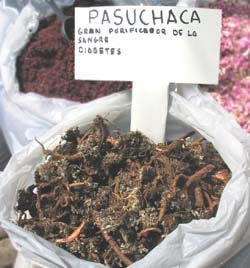
Image result for pasuchacaDoing their role, the Commission recently identified a potential case of biopiracy in Japan. Towa Corporation submitted an application for a patent to the Japanese Patent Office (JPO). The request was filed under the description ‘Agent to increase HDL cholesterol levels’, and referred to an extract from the Pasuchaca (Geranium dielsianum) which is of Peruvian origin. The Commission further argues that the application lacks ‘inventive step’ (it is obvious for a person skilled on the art).

Following this, the Foreign Ministry informed the Commission that it has received a communication from the JPO. This communication informs that the ‘patent application related to the Pasuchaca has not yet been examined and that it will take into account the observation submitted by Peru’.

Pasuchaca, is it novel and or obvious (inventive step)?

Typing the word ‘pasuchaca’ in the search engine Google, many hits appeared, referring to it as ‘medicinal plants’. The majority of sites noted that it is used for diabetes treatment and many others sites if not all, referred to it as a Peruvian plant. There are therefore, 2 issues to consider here:

  1. Access to Genetic Resources: Japan is a member of the Nagoya Protocol on Access to Genetic Resources and the Fair and Equitable Sharing of Benefits Arising from their Utilization to the Convention on Biological Diversity. This legal instrument (soft law) is an international agreement that aims at sharing the benefits arising from the utilization of genetic resources in a fair and equitable way. Therefore it is expected that the authorities request the applicant to provide for the disclosure of origin of genetic resources as a requirement for patentability of such resources (and/or associated traditional knowledge); and
  2. Pasuchaca has been ‘used’ by ancient Peruvians for the diabetes treatment [novelty ruined, but can still be patentable: new use of a known substance]. Therefore potentially Pasuchaca may have that inventive step needed as it happen in the case of MACA for hair growth agent and also as an anti-age cream [both products patented by NATUREX, this is so because the use of MACA had nothing to do with previous knowledge - serendipitous]. Will Pasuchaca have the same fate? I then proceed to add to my search the word ‘cholesterol’ and… the site ‘peruherbals.com’ claims that Pasuchaca is an * Effective hipoglucemiant, * Excellent for diabetes and pancreas, * Reduce high cholesterol (more info click here). Is it then obvious that as Pasuchaca reduces the bad cholesterol, it increases the good cholesterol [as claimed in the Japanese application?]. We'll have to wait to see the JPO decision.

Source INDECOPI.
Read More