Friday, 29 July 2022
Friday, 22 July 2022

Asamblea General de la OMPI avanza hacia la celebración de conferencias diplomáticas sobre diseños y conocimientos tradicionales asociados a recursos genéticos
Monday, 18 July 2022
Peru: WIPO Geneva Act
The Sixty-Third series of meeting of the Assemblies of the member states is taken place at WIPO headquarters (Geneva, 14th-22nd July). While the event is taken place in a hybrid format, the Peruvian delegates are present. Specifically, the executive president of the Peruvian Intellectual Property Office (Indecopi), noted face-to-face to the counterparts, ‘the initiatives and advances of Peru in the field of intellectual property’. [more info here]
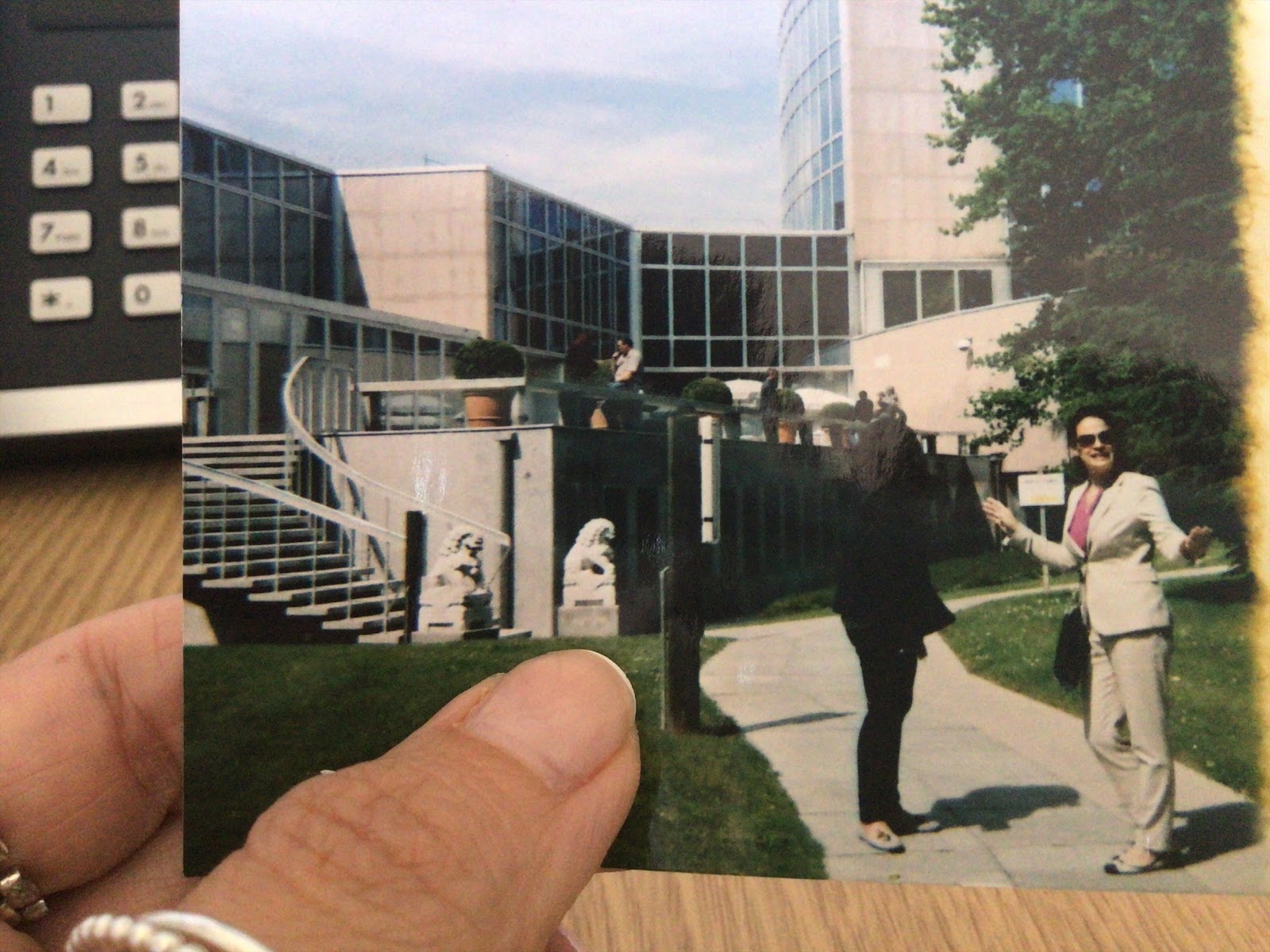
| The Geneva Walk - walking towards WIPO, June 2016 |
In particular, it was disclosed that Peru will deposit its instruments of accession to five treaties, including the Geneva Act of the Lisbon Agreement, which shows ‘commitment as a country’. There is not other indication of what other Treaties or Agreements those would be, but if we are to guess, one maybe the Madrid System, which now covers 128 countries. From Latin America:
- Brazil (Madrid Protocol, October 2019;
- Chile (Madrid Protocol, 2022);
- Colombia (Madrid Protocol, August, 2012);
- Cuba (Madrid Agreement, December, 1989; Madrid Protocol, December 1995);
- Mexico (Madrid Protocol, (Madrid Protocol, February 2013).
Regarding Geographical Indications (GI), the three countries,
that is Colombia, Ecuador and Peru, amended and or adopted GI legislation in a
manner similar to the EU. The EU deposited its instrument of accession
to the Geneva Act of the Lisbon Agreement on 26 November 2019, and in force
since February 2020.
Any other guess? Peru is not yet pat of the Hague Agreement,
Nice agreement, Locarno Agreement, Strasbourg Agreement, Vienna Agreement, Nairobi
Treaty, Patent Law Treaty and Washington Treaty – which of these, do you think
they are going to go for?
Monday, 27 June 2022

Paraguay: news with no news
From the Paraguayan IPO I read the news about the Mercosur – Singapore Free Trade Agreement (FTA).
Last week, the 6th round of negotiations seemed to end with some consensus on the matter of intellectual property, covering trade marks, patents, design, traditional knowledge and geographical indications. The meeting took place online and was led by the coordinator of the IP section Juan Esteban Aguirre, who is the Director of the International relations at DINAPI (Dirección Nacional de Propiedad Intelectual – that is, Paraguay national IP).
Previous round covered: access to the goods market, rules of origin, commercial defense, technical barriers to trade, investment, electronic commerce, services, telecommunications, government procurement and institutional aspects, trade in services, public purchases, and electronic commerce. The Foreign Trade Information System (SICE) publishes all documents relating to the negotiations, but it has not been updated (last doc is the 4th table of negotiation - April 2022).
MERCOSUR is a trade bloc in South America (Argentina, Brazil, Paraguay, and Uruguay – Venezuela was suspended in 2017) and represents the 5th world economy. The largest exports from MERCOSUR in 2022 is to China (USD$ 31,532 M); same with imports.
In 2019, MERCOSUR concluded FTA with the EU (more info here). An FTA cut hassle involved in exporting and importing goods and services, could it be by the reduction or removal of custom duties and or simplifying custom procedures.Some FACTS on IP
All FIVE countries are members of the WTO and consequently have incorporated the TRIPS agreement into their national legislation – minimum standard of IP.
- Madrid System (trade mark international register): Brazil and Singapore are members
- Hague System (design international register): Singapore is a contracting party
- Patent Cooperation Treaty (patent international register): Brazil and Singapore are members
Good to know – Brazil
The Brazilian IPO may challenge clauses establishing that improvements developed by the licensor may only be used by the Brazilian company upon the execution of a new agreement. Law No. 4,131/1962 regulates foreign capital in Brazil .
INPI assessment and approval of Technology Transfer and IP licensing agreement are mandatory for the purposes of:
- authorizing remittance of royalties to foreign licensor, grantor of IPRs recognized in Brazil;
- trigger tax deductibility by the Brazilian party of amounts paid in connection with IP license, acquisition; and
- entitle the Brazilian party to enforce licensed, granted IP rights.
Other IP facts in Brazil:
- INPI neither annotate agreements nor issue certificate of registration for the license of non-patented proprietary technological knowledge.
- INPI does not accept ‘technology’ licenses and establishes that the technology is permanently transferred to the Brazilian recipient.
- Software agreement registration is not required unless it involves the transfer of source code and know-how.
For more information in Latin America, have a look at the vast information hold at Latin America IP SMEs Helpdesk here.
Source DINAPI.
Friday, 24 June 2022

Brazil: fakes in the agricultural sector
- Raising awareness for society to stop such practice which is a ‘crime’ and a matter of public health; back in September 2021, ABIFINA launched the “Brochure to Combat Piracy of Agricultural Inputs – Agricultural Defenses and Veterinary Products”.
- Launching “Monitoramento de Ilegais AgroVet” [“Monitoring of Illegal AgroVet”] initiative. This brings together actions by police, customs, and agricultural inspection authorities in the fight against fakes. To this effect, news is collected and sent in a weekly report to interested parties.
Source ABIFINA.
Wednesday, 22 June 2022

Encounter 21: The Metaverse as a Challenge to Classical IP
Tuesday, 21 June 2022

Ready, Steady…GO – the invention competition is on
- First Place Award, distinguishing the national ‘invention that is considered the most outstanding’, assessed as exceptionally due to the ‘potential economic, social and commercial/productive impact that it can generate’.
- Green Patent Award, recognizing the invention with a great applicability in the area of environment and or climate change.
- Peruvian Inventor Award which recognizes women in the field – this could be an individual or a group of only women, which invention is ‘considered the most inventive and with the greatest potential impact for the country’.
Good luck my Peruvian friends! May the odds be in your favour.
More information here
Thursday, 16 June 2022
oriGIn on Geographical Indications compilations
Yesterday afternoon I attended the event on oriGIn worldwide GI compilations. It comprises several speakers from around the world but relatable to Latin America, Sergio Chuez from INAPI was present.
The welcoming was led by Erik Thevenod-Mottet from the Swiss IPO, followed up by Massimo Vittori representing oriGIn. The idea was to share the wonderful tool, that much needed, GI compilation. The talk started by ‘some figures’
1. recognising that there are over 13,000 GIs around the world [oriGIn has compiled 9,047 – that are ‘recognized’], and here I made a pause. It was an important remark made by Massimo that ‘recognised’ may not label it as ‘registered’ as some countries may not legally registered a particular GI but still there is recognition. This is important to know because a GI is appreciated by us, society/consumers and while perhaps a GI has not obtained the legal status of registered GI, it still, in our minds, has goodwill.
2. There are different legal systems, mainly sui generis around the world that protect GI e.g. China, the EU, Africa (OAPI), the Andean countries (South America), Canada, Mexico, Chile, etc
3. GI is applicable to several sectors not only agro-products but also includes non-agricultural products such as craft [Brazil protects services too]
4. International legal frameworks are in place: TRIPS, Lisbon Agreement and more recently the Geneva Act
5. There are over 200 bilateral agreements covering GIs [mainly they follow the bilateral agreement between France and Germany signed back in the 60s - adding an annex with a list of GIs].
Massivo moved to explain how the search works (database can be accessed here). I must say that I have tried and it is not complicated at all [I do not consider myself tech-savvy] and it is, I may say ‘ straightforward’. You may search by regions (e.g., South America (you can see all 444); Central America (with 74), etc), or by country. There is also interesting data such as ‘legal protection’ under which the said GI is protected, for instance, sui generis, trade marks, legislative act, etc; as well as per ‘type of product’. Under this, I have been intrigued by ‘services’, knowing the case of ‘Porto Digital’ in Brazil reported in this blog here. The data shows THREE GIs for services; aside from the Brazilian case, there is one in Chile ‘Calidad Aysen Paragonia-Chile (protected as a trade mark); and another, that of ‘Duzdag’ from Azerbaijan as a sui generics GI. Under types of products there is a very meticulous selection e.g., food products/dairy; food products fruits; food products/vegetable oils and fats; non-food product/ wood; non-food product leather; etc. There are 7846 GIs protected under sui generic rights which Massivo asserted is a legal system which is more robustic and solid.
While I (virtuality) attended all speakers, I engaged with a couple of question when Chuez spoke about the work they do at the INDECOPI. Relating to this report today was the fact that by mere coincidence, yesterday morning I had published in this blog, about collective marks, and the QR code as well as the application been done for free. I therefore asked if there were any incentives for nationals to apply for GIs, here is the answer: ‘…[while GI applications are not free], we offer free and complete technical assistance for the filing, including the organization of the regularity council’ . This is indeed a pretty good offer, and I am sure many micros and SMEs do and will benefit from this. Peru, as many other countries in Latin America, is rich on natural resources and traditional knowledge. Yet, as of today, there are only 10 national GIs: ONE for a spirit, ONE for handcraft and EIGHT for food related products.
If you attended the event, what are your thoughts? The next GI event would be in Montpellier (5th July), I will be in (physical) attendance, would you? More info on the Worldwide Perspectives on GI here.
Wednesday, 15 June 2022

Peru: QR codes for Collective Marks and enhancing Micro Enterprises
Spanish]
Tuesday, 14 June 2022
Brazil: Patents and Transgenic Plants
The Brazilian IPO (INPI) has initiated a public consultation on the Nota Técnica CPAPD nº 01/2022. The Nota ‘aims to define the guidelines to be followed by its examiners in the examination of patentability of inventions associated with transgenic plants’, specifically ‘elite event’.
Art 2 of the consultation welcomes suggestions and critiques related to the note and invite these to be submitted to cpapd.patentes@inpi.gov.br (deadline 30 days from 31 May 2022). After the deadline, and in accordance with Art 3 of the note, INPI will present the contributions provided by the consultation together with the final text. Click on the note to read the consultation publication [Portuguese]
The Nota Técnica CPAPD nº 01/2022 can be found here. [Portuguese]
The application of genetic transformation technology and the role of patents have been discussed for decades, in particular the matter of patentability of ‘living organism’ (biotechnology) and the ‘public-good breeding’. A technical understanding is needed as the requirements of novelty (new) and inventive step (non-obvious) are crucial. Moreover, whether the subject matter can be patentable. In any case, Brazil is a member of the international union for the protection of new varieties of plants (UPOV Convention) since 1999 and thus, have laws on plant variety protection in line with such international Convention.
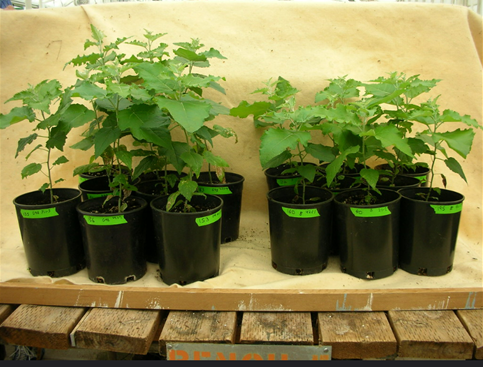
| Cisgenic tress by Oregon State University |
In principle, biological matter is not patentable (in Brazil this is so by Art 18(III) of the Industrial Property Law – Law No 9.279/96). However, it does not mean that an invention is not patentable just because the product and or process contain biological material. Here is then when it gets complicated and thus, the guidelines are welcome.
Article One of the CPAPD nº 01/2022 starts by providing a definition of what ‘elite event’ means. This is done by FIVE criteria, as follow:
1)the event transforms a plant
2) through the insertion of a transgene
3) by using a genetic construct
4) been stable, in which the insertion took place at a specific location in the plant genome, and
5) gives the plant a superior technical effect when compared to other transformation.
Because transgenic plants are the ‘inventive concept’ that links to the ‘accessory ones’, there is the need to discuss the potential patentability of the additional inventions that derive from the main invention.
Source INPI.